
Last updated November 21, 2026
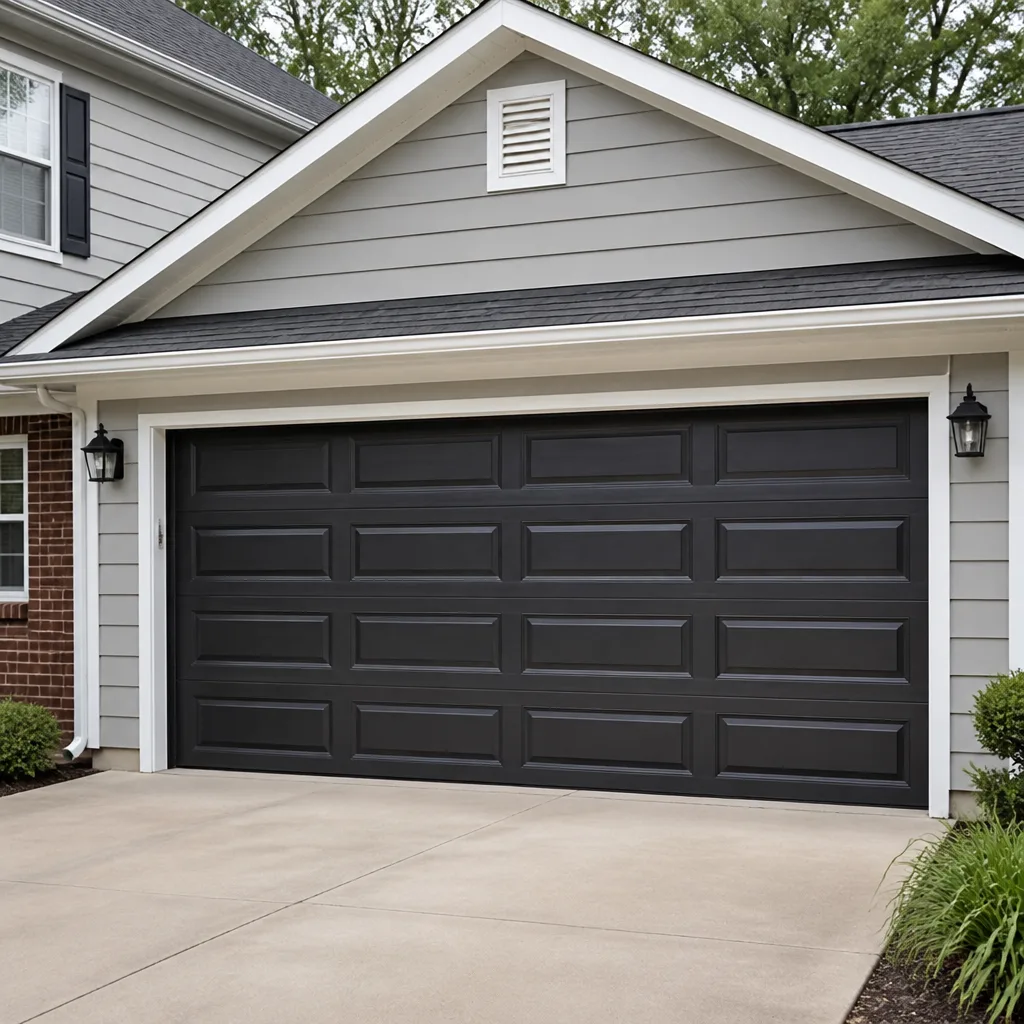 Raised-panel steel
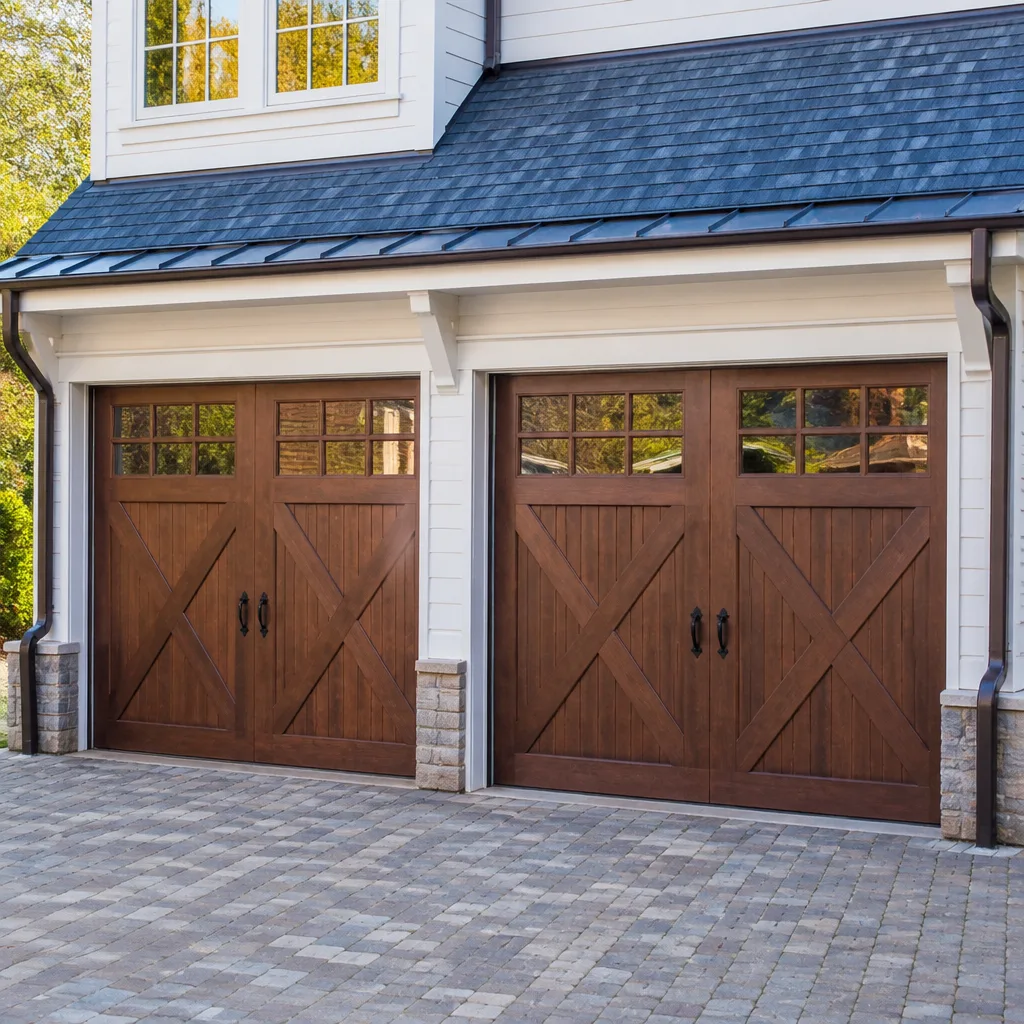 Carriage house
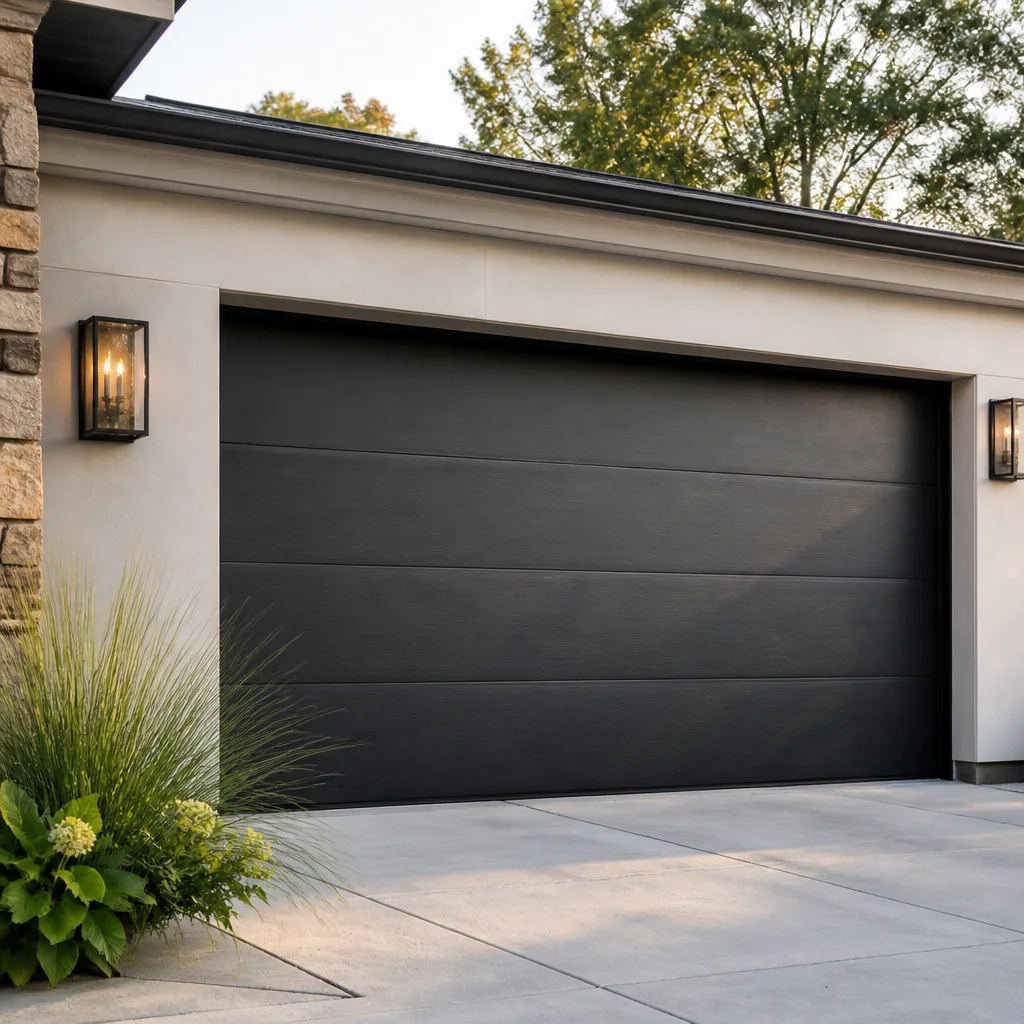 Modern flush
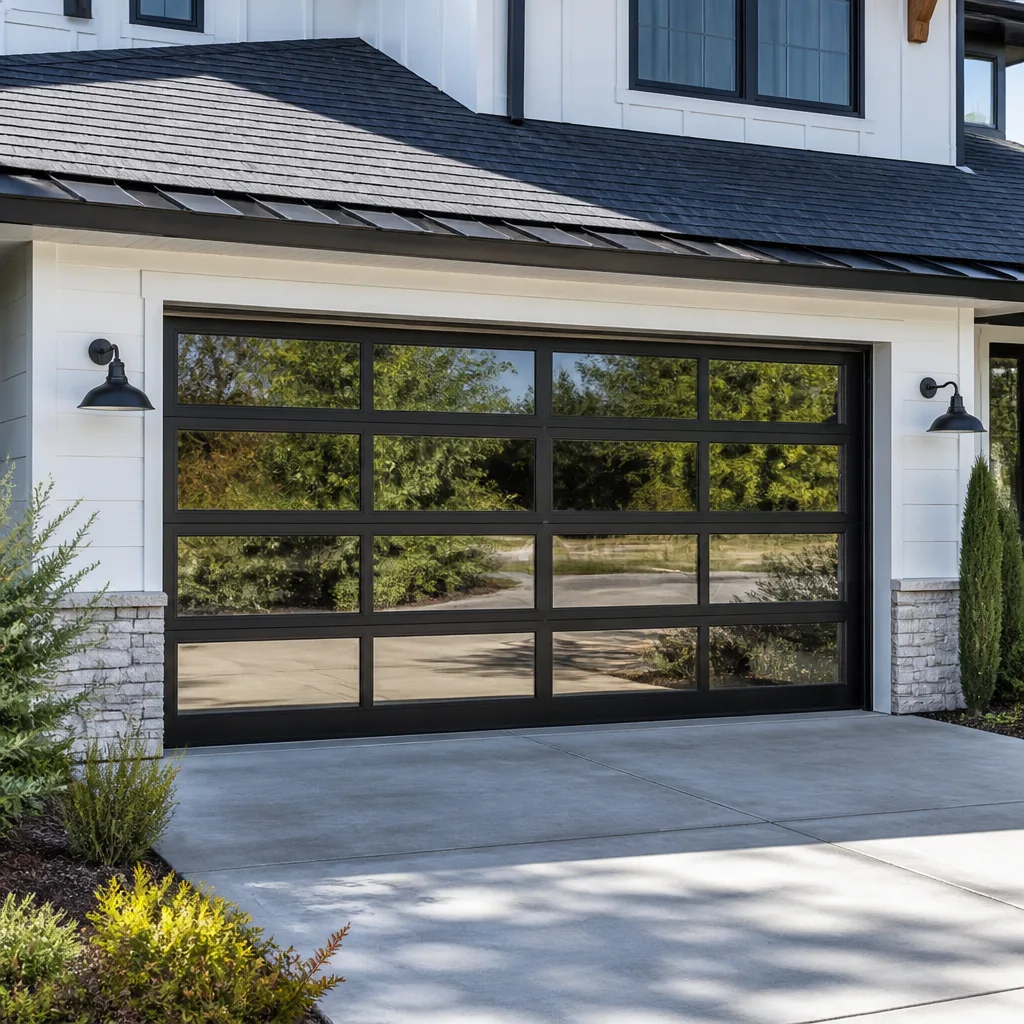 Full-view glass
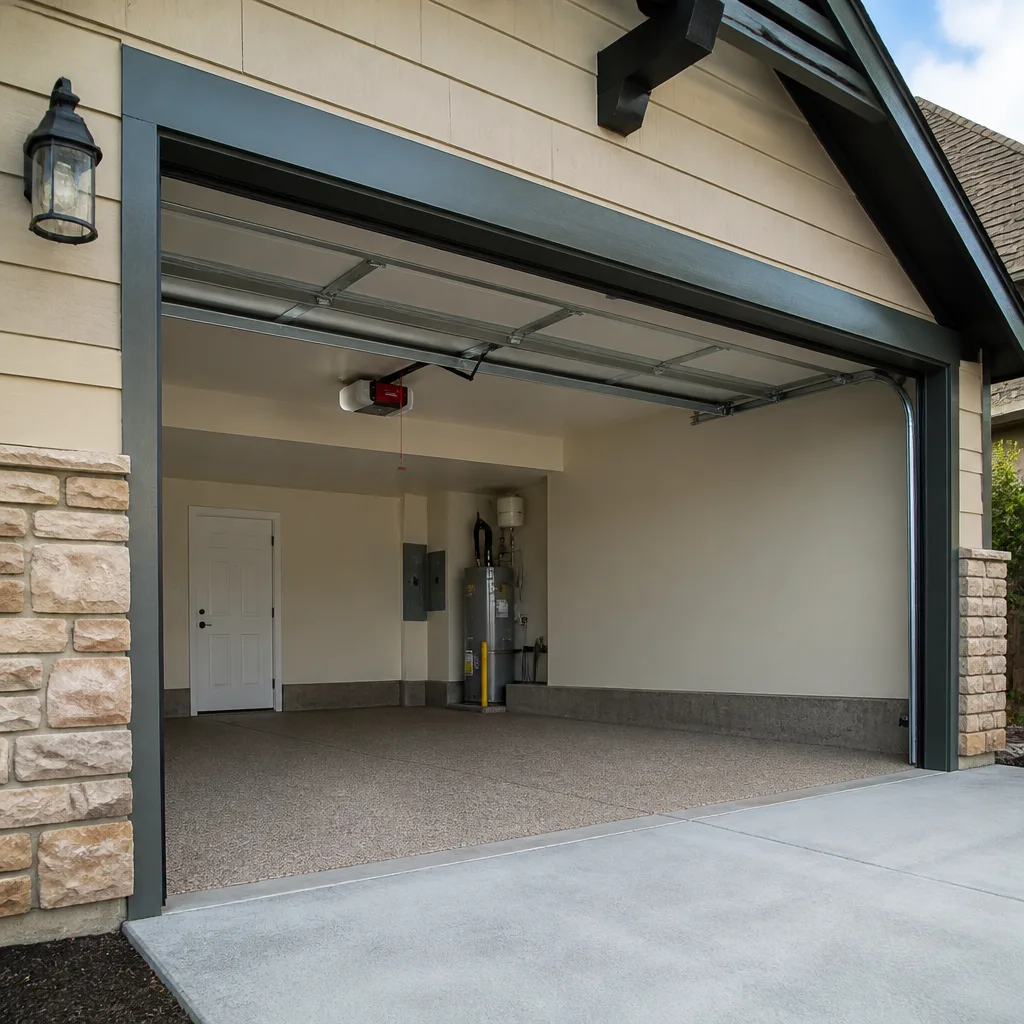 LiftMaster openers
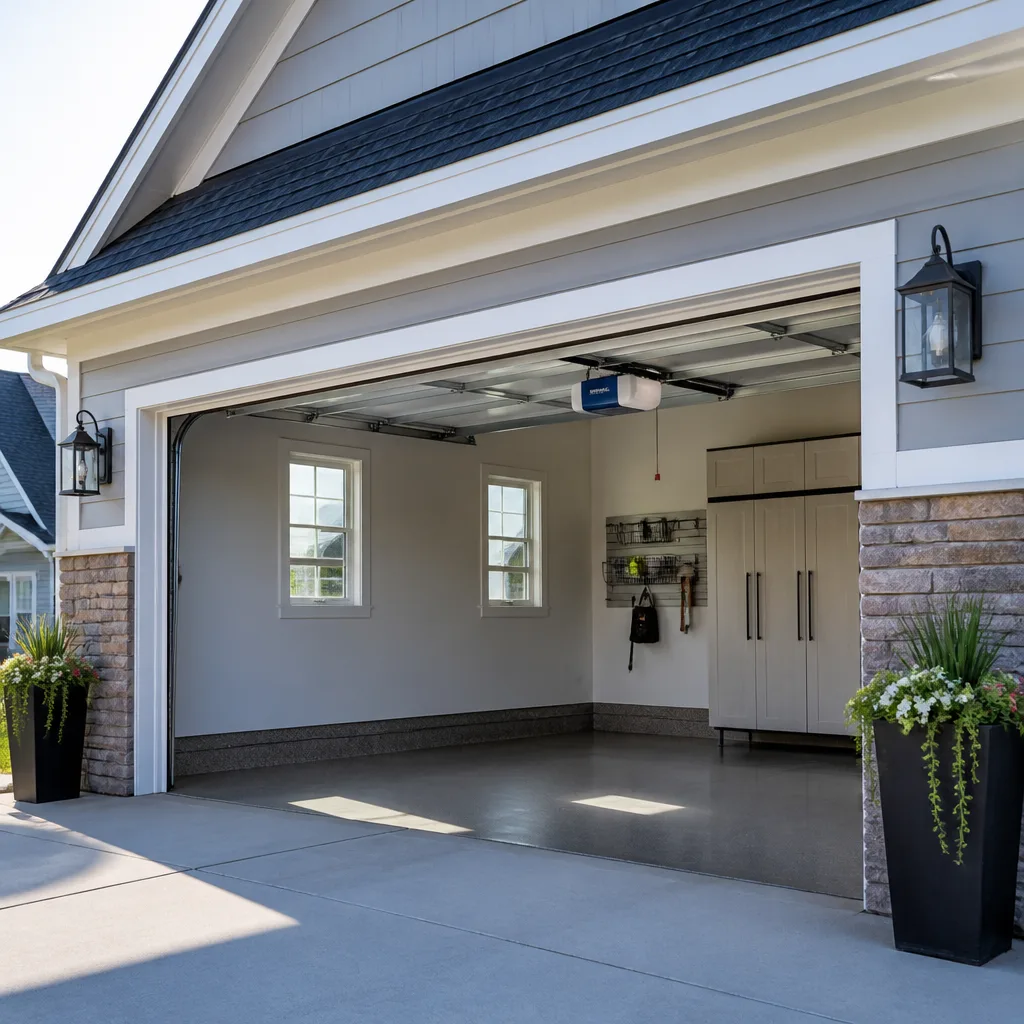 Chamberlain openers
Full 25-point door and opener safety check with every visit - springs, cables, rollers, tracks, and your LiftMaster or Chamberlain opener included
You get a price before we start. It does not change when the pro arrives.
Get your free estimateGarage Door Cost Breakdown: The Yonkers Homeowner’s Reference for 2026
That national average of “$1,100 for a new garage door installed” assumes a standard opening, a ground-floor slab, and inland labor rates. In Yonkers, three common variables can push that number to $2,400 before you’ve upgraded a single thing – and none of them are upsells. They’re what it actually takes to hang a door that opens, closes, and keeps the weather out of a house that was built before anyone cared what a garage looked like from the street. This guide breaks down what a garage door really costs in Yonkers in 2026: the parts, the labor, the material choices, the variables that quietly move the number, and how to tell a fair quote from a padded one.
Quick Answer
A full garage door replacement in Yonkers in 2026 typically runs $1,400 to $3,200 for a standard single-car opening, and $2,200 to $5,500 for a double door, with the door panel, hardware, and labor bundled in. A single torsion spring repair usually lands between $180 and $340 per spring – a matched pair is replaced together, so expect roughly double that. An opener replacement runs $350 to $750 installed, depending on horsepower and whether you want smart-home features. These are estimates; the written quote from the technician is the price you pay.
Styles & brands we work with
- Raised-panel steel
- Carriage house
- Modern flush
- Full-view glass
- LiftMaster openers
- Chamberlain openers
Table of Contents
- What actually drives the price in Yonkers
- Itemized cost breakdown for 2026
- The opening-size premium and older Yonkers housing
- Material comparison: steel gauge, insulation, wood composite
- What legitimately raises a quote vs. margin padding
- Cost of ownership: why the cheap door costs more later
- Repair or replace? A Yonkers decision guide
- Common mistakes to avoid
What Actually Drives the Price in Yonkers?
Garage door pricing in Yonkers is shaped by three forces that national cost-estimator sites don’t model: Westchester labor rates, the prevalence of non-standard openings in older housing, and the material premium for rust-resistant hardware in a high-salt-use-road environment. None of these are cosmetic. They’re baked into the cost of getting a door to work in this specific market.
Yonkers sits at the southern edge of Westchester, which means the labor pool is shared with New York City and the hourly rates reflect that. A crew that can hang, balance, and tension a torsion door correctly isn’t cheap to keep on staff, and the labor portion of a garage door installation quote here is a heavier share of the total than it would be fifty miles north. When we quote a job in Yonkers, the labor line is the one that surprises homeowners most.
Older housing stock is the second variable. Yonkers has blocks of century-old homes in neighborhoods like Park Hill, Colonial Heights, and Nodine Hill where the garage was often a later addition, a conversion, or a space built for a car much smaller than a modern SUV. That means openings that aren’t 8 by 7 or 16 by 7 feet. They’re off by inches, or substantially wider after a renovation. Every deviation from standard costs money – sometimes a few hundred, sometimes well over a thousand.
The third force is winter road salt. Yonkers plows and salts its streets hard, and garage doors on homes near Route 1, Central Park Avenue, or Yonkers Avenue live with salt spray tracked in on the car and lofted into the door’s hinges, rollers, and track every time the door moves. That doesn’t ruin a door in a season, but a door that opens and closes twice a day for ten years in a salted environment needs hardware that’s built to handle it. Cheap stamped hinges wear out faster here than they would in a dry climate.
Three practical things follow from that:
- You can’t use a national cost calculator as a quote. It may be accurate for Phoenix. It isn’t for Yonkers.
- A “whacky” opening is a normal cost, not a rip-off. If you’re told the opening is non-standard, ask for the measurement and a breakdown of what’s being adjusted.
- Ask what kind of hardware is being installed. The door panel is visible; the hinges and rollers are what break first in this climate.
The goal of this guide is to give you the numbers and language to have a real conversation with any garage door company in Yonkers, not just ours. When you understand what’s driving the price, you can tell a technician diagnosing your door from one selling you a bill of goods.
What Does Each Part of the Job Cost in Yonkers in 2026?
A garage door job is five distinct cost centers, and most quotes bundle them into a single line so you can’t see what you’re paying for. Here’s what each one actually costs in the Yonkers market in 2026. These are typical ranges; your written estimate is the final number.
| Cost center | Single door | Double door |
|---|---|---|
| Door panel (non-insulated steel) | $500 – $900 | $900 – $1,600 |
| Door panel (insulated, 24-25 gauge) | $900 – $1,500 | $1,600 – $2,800 |
| Door panel (wood composite) | $1,400 – $2,400 | $2,400 – $4,200 |
| Hardware package (hinges, rollers, tracks, springs) | $150 – $350 | $250 – $500 |
| Opener (belt or chain drive, installed) | $350 – $650 | $400 – $750 |
| Labor – removal and installation | $400 – $800 | $600 – $1,100 |
| Disposal of old door and materials | $75 – $150 | $100 – $200 |
The labor range reflects Westchester rates. A crew that comes in with its own truck, hauls the old door away, and has the new door balanced, tensioned, and tested in a single visit is charging for the expertise of doing that correctly – a torsion spring that’s under- or over-tensioned is a dangerous thing and a cheap crew that guesses at the weight is not saving you money. Disposal is often capped into the labor line; ask for it to be shown separately so you know you’re not paying twice for the same trip.
The opener deserves its own conversation. If your existing opener is a LiftMaster or Chamberlain unit still working with a smart-home app, there may be no reason to replace it. If it’s a Genie or Craftsman legacy system with no safety-reversing eyes or a burned-out logic board, an upgrade is often the right call. garage door opener repair is a smaller line item than a full replacement, and we often recommend repair before replacement – a working opener is worth keeping.
Two further line items matter when they show up:
- Track straightening or replacement – $100 to $300 added if the existing track was damaged or is out of square.
- Spring upgrade – $50 to $150 over standard cost if you want higher cycle-rated springs (worth it, as we explain below).
The Opening-Size Premium: Why Yonkers Doors Often Cost More
A standard garage door opening is 8 feet wide by 7 feet tall for a single car, or 16 by 7 for a double. In a whole lot of Yonkers homes, it’s neither. The opening is 9 by 7, or slightly taller than 7, or a converted carriage house bay that was widened at some point in the 1980s. When that happens, the door isn’t a stocked size, the tracks are custom-cut, and the price climbs.
How much? Here’s what non-standard openings add in the Yonkers market in 2026:
- Anything under 6 inches off standard – usually $100 to $250 added for custom-cut tracks and a non-stock door panel. Not a big deal.
- 6 inches to a foot off standard – $250 to $600 added. This is the common case for widened single bays in Crestwood, Woodstock, and blocks around Kimball Avenue where additions changed the front elevation.
- Non-standard height – $300 to $700 added for a taller-than-standard opening, since a taller door needs heavier springs and a higher torsion bar.
- Structural header work – $600 to $2,000+ if the opening has to be widened or re-headed by a general contractor. This is a real construction job, not a garage door job, and any garage door company telling you they’ll do the header as part of a door install is either misquoting or working outside scope.
Our advice: before you accept any Yonkers garage door quote, ask for the measured opening size in inches. Any legitimate quote starts there. If you’re told “it’s non-standard” with no measurement, that’s a red flag – either the technician didn’t measure, or someone is padding the line. We’ve seen plenty of both, and in a market where custom openings are common, it’s worth insisting on the number.
One thing that surprises people in older Yonkers housing: the opening is sometimes not square. The house settled, the prior door was hung against a framing error, and a new door won’t sit right against the tracks until the actual opening is corrected. That correction is a construction item. It adds cost. It’s not optional if you want a door that opens smoothly and doesn’t eat its rollers within a year.
Steel Gauge, Insulation, or Wood Composite: Which Door Makes Sense in Yonkers?
The single biggest pricing variable inside the door panel itself is gauge and insulation. 24-gauge steel is the industry standard for residential doors; 25-gauge is lighter, cheaper, and dents more easily. Insulated doors carry a polyurethane or polystyrene core; non-insulated doors are thinner and colder. Wood composite doors use a composite surface over a steel or aluminum frame to imitate wood grain without the maintenance of real wood. Here’s how those choices price out in Yonkers in 2026:
| Material | Single door | Double door | Best for |
|---|---|---|---|
| Non-insulated steel (25-gauge) | $500 – $800 | $900 – $1,500 | Detached or unheated garages |
| Insulated steel (24-gauge, polystyrene) | $850 – $1,300 | $1,500 – $2,400 | Attached garages, most Yonkers homes |
| Insulated steel (24-gauge, polyurethane) | $1,100 – $1,600 | $1,900 – $3,000 | Heated or living-space-adjacent garages |
| Wood composite over steel frame | $1,400 – $2,400 | $2,400 – $4,200 | Historic facades, curb appeal priority |
For most Yonkers homes, insulated 24-gauge steel is the sensible middle. In a house where the garage shares a wall with the kitchen or a bedroom, the insulation matters beyond the garage itself – a non-insulated door is essentially a hole in the thermal envelope every time it’s closed, and in a Westchester winter that shows up in your heating bill. Going to polyurethane over polystyrene adds roughly $150 to $300 per door and buys meaningful performance; whether it’s worth it depends on whether the garage is heated or conditioned.
Wood composite is a question of curb appeal. In neighborhoods like Lawrence Park or the historic stretches of Park Hill where the streetscape still reads as early 20th century, a wood-grain composite door fits the architecture in a way that a plain steel panel doesn’t. It costs more, and it asks for occasional maintenance on the finish – but resale buyers notice.
Whatever material you choose, the hardware underneath matters more in Yonkers than in most markets. Nylon rollers outlast steel rollers wherever road salt is in the air; heavier-gauge hinges cost a little more and last meaningfully longer. You can usually ask for a hardware upgrade at the quote stage without changing the door itself, and in a salted-street environment like ours, it’s the best $75 to $150 you can spend on the job.
What Legitimately Raises a Quote – and What’s Just Margin Padding?
Not every higher quote is a bad quote. Some line items cost more because they’re actually better hardware or extra work, and some cost more because someone padded the number. Here’s how to tell them apart in a Yonkers garage door quote in 2026.
Legitimate cost drivers
- Higher spring cycle rating. A standard spring is rated for about 10,000 open-close cycles. Upgrading to a 20,000 or 25,000 cycle spring costs $50 to $150 more per spring and roughly doubles the spring’s working life. In a house where the door opens and closes four times a day, that’s the difference between replacing the spring every 7 years and every 14. Worth it.
- Opener horsepower matched to door weight. A heavy insulated double door needs a 1.25-horsepower opener; putting a 1/2-horsepower opener behind it burns out the motor in a few years. A quote that upgrades the opener because the door is heavy is doing it right. A quote that upgrades the opener because it’s the premium model without stating why is padding.
- Marine-grade or nylon hardware in salted-street areas. Costs $50 to $100 more than standard; saves a hinge replacement every couple of years. We recommend it for any Yonkers garage facing a plowed street.
- Insulated door when the garage adjoins living space. Not cosmetic – it’s about comfort in the house behind it.
- Structural correction of an out-of-square opening. Unavoidable work. Ask for the photo or the measurement that justifies the line, and expect it.
Margin padding to question
- A “custom” door that’s actually a standard size. If the door is listed as custom but the opening is 8 by 7 feet, that’s not custom.
- An upgrade package you didn’t ask for. Smart-home opener, LED lighting, extended warranty – nice features, but if they’re bundled into a quote without explanation, they’re adding to a number you didn’t need to spend.
- Spring replacement at full pair price when only one spring failed. There’s an honest reason most companies recommend replacing both springs at once (they wear at the same rate), but they should say that, and they should state the per-spring price so you can see the logic.
- An opener replacement quoted on a working opener. If your existing opener is running fine and the failure is in the door – track, spring, roller – you may not need a new opener at all. Ask.
- “Structural” charges with no measurement to back them up. Require a measured opening in inches and an explanation of what correction is actually needed.
The general rule in this market: any line item with a specific, measured justification can usually stand. Any line item whose justification is “that’s just how it is” probably can’t. We’d rather show you the measurement than argue about it.
Cost of Ownership: Why the $400 Cheaper Door Costs More Over Ten Years
It’s easy to look at two quotes for a Yonkers garage door and pick the one that saves $400. Over ten years, the math usually flips.
Take two doors at the same size. Door A costs $1,300 installed with a standard 10,000-cycle spring pair, 25-gauge steel, and standard steel rollers. Door B costs $1,700 installed with 20,000-cycle springs, 24-gauge insulated steel, and nylon rollers. That’s a $400 gap up front.
Now run them both for a decade with the door opening and closing, say, four times a day – a normal pattern for a Yonkers family with two cars:
- Springs. Door A replaces its spring pair at year 7, at $180 to $340 per spring, so roughly $400 to $680 for the pair plus labor. Door B has another seven years on its springs. Door A loses $400 to $680 right there.
- Rollers and hinges. Steel rollers in a salted-street environment start squealing and binding after 4 to 6 years. Expect a roller and hinge refresh at year 5 – around $150 to $300 – plus another around year 9. Nylon rollers usually outlast the door’s first decade without replacement. Door A loses $300 to $600.
- Dents and appearance. 25-gauge steel dents more easily than 24-gauge in daily use, and a dented, squealing door lowers curb appeal at the exact moment a house goes on the market. Door B still looks like a door a buyer wants.
- Heating and cooling. Insulated vs. non-insulated matters most in a garage that shares a wall with the house. The difference isn’t enormous per month, but over a Westchester decade it’s real.
The honest total: Door A’s $400 savings up front costs roughly $700 to $1,200 in maintenance and performance over a decade. That’s the actual cost-of-ownership picture in Yonkers, and it’s why we recommend the $1,700 door over the $1,300 door almost every time we’re asked. The same logic applies to springs alone – a standard 10,000-cycle spring that gets replaced twice in ten years costs more than a 20,000-cycle spring replaced once, even though the second spring costs more at the counter.
None of this changes the written quote being the number you pay. What it changes is whether the quote you accept buys the door that’s still going fifteen years from now, or the one that’s back on the schedule sooner than you’d like.
Repair or Replace? A Yonkers Decision Guide
Not every door problem is a replacement. A surprising share of Yonkers garage door calls we get are for something a repair will fix – a snapped spring, a bent track, a burned-out opener, a door that came off its hinges after someone backed into it. Here’s how to think about the decision.
Repair usually makes sense when:
- The door panel itself is in good shape (no rot, no structural dents, no rust-through at the bottom panel).
- The failure is a spring, roller, hinge, cable, track section, or opener.
- The door is less than about 15 years old and hardware is still available.
- The cost of repair is under roughly half the cost of replacement for the same size door.
Replacement usually makes sense when:
- The bottom panel or several panels are rusted through – common on Yonkers doors that get a lot of salted slush melting against them every winter.
- The door is more than about 20 years old and repairs are becoming a pattern.
- You want to upgrade insulation or curb appeal for a sale, renovation, or comfort.
- The opening is out of square and the existing hardware can no longer be adjusted to compensate.
Spring repair in particular is a job we treat as its own specialty – torsion and extension spring work is the most technically demanding repair on the door, and a spring that’s under- or over-tensioned will fail again quickly or, worse, cause an injury. If your door’s spring snaps, we don’t recommend DIY replacement under any circumstances; it’s the most dangerous part of the door to work on, and trained professionals have the tools and the technique for it. Our garage door repair service handles spring work, opener diagnosis, track and roller replacement, and everything else in between.
If replacement is the right call, we recommend getting a measured opening and a written quote before you commit to a panel – because once we’re looking at the opening, we can usually tell you whether a standard door will actually fit, or whether you’re looking at the non-standard premiums we cover above. That’s the moment to understand the number, not after the door’s ordered.
Common Mistakes to Avoid
- Treating a national cost calculator as a local quote. It may say $1,100 for a new garage door. In Yonkers, labor, non-standard openings, and salted-street hardware almost always push that number up, and you’ll be frustrated at the written estimate you could have seen coming.
- Accepting “non-standard” without a measurement. Ask for the opening size in inches, every time. A legitimate quote will have it on the page; a padded one won’t.
- Replacing a working opener when the door is the problem. A door that sticks, jerks, or won’t close all the way may have a track, spring, or roller failure that a new opener won’t fix. Diagnose before replacing.
- Choosing 25-gauge steel to save $200. In Yonkers, where doors live in salted-street conditions and heavy daily use, 25-gauge dents and wears out noticeably faster. The $200 doesn’t come back.
- Ignoring the spring cycle rating. The cheapest spring is often the shortest-lived, and spring replacement is the most expensive routine repair you’ll face. Pay the $50 to $150 for the higher-rated spring.
- Doing spring work yourself. Torsion springs store a life-threatening amount of energy. There is no safe DIY path here. This is the one repair on a garage door that should always go to a trained technician.
- Skipping the disposal line. Some quote sheets lump disposal into labor, and some charge for it separately and then add it again in labor. Ask for it to be stated once, clearly.
See the difference
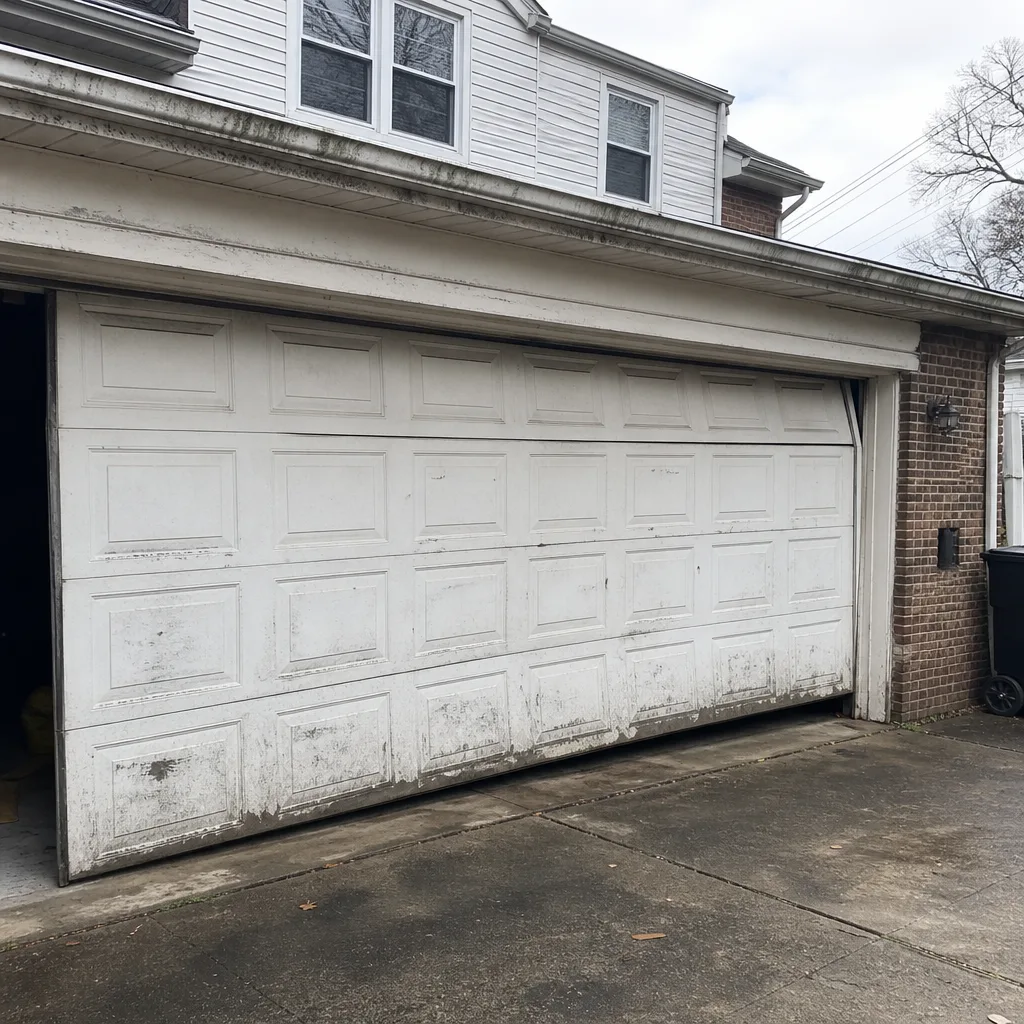 Before
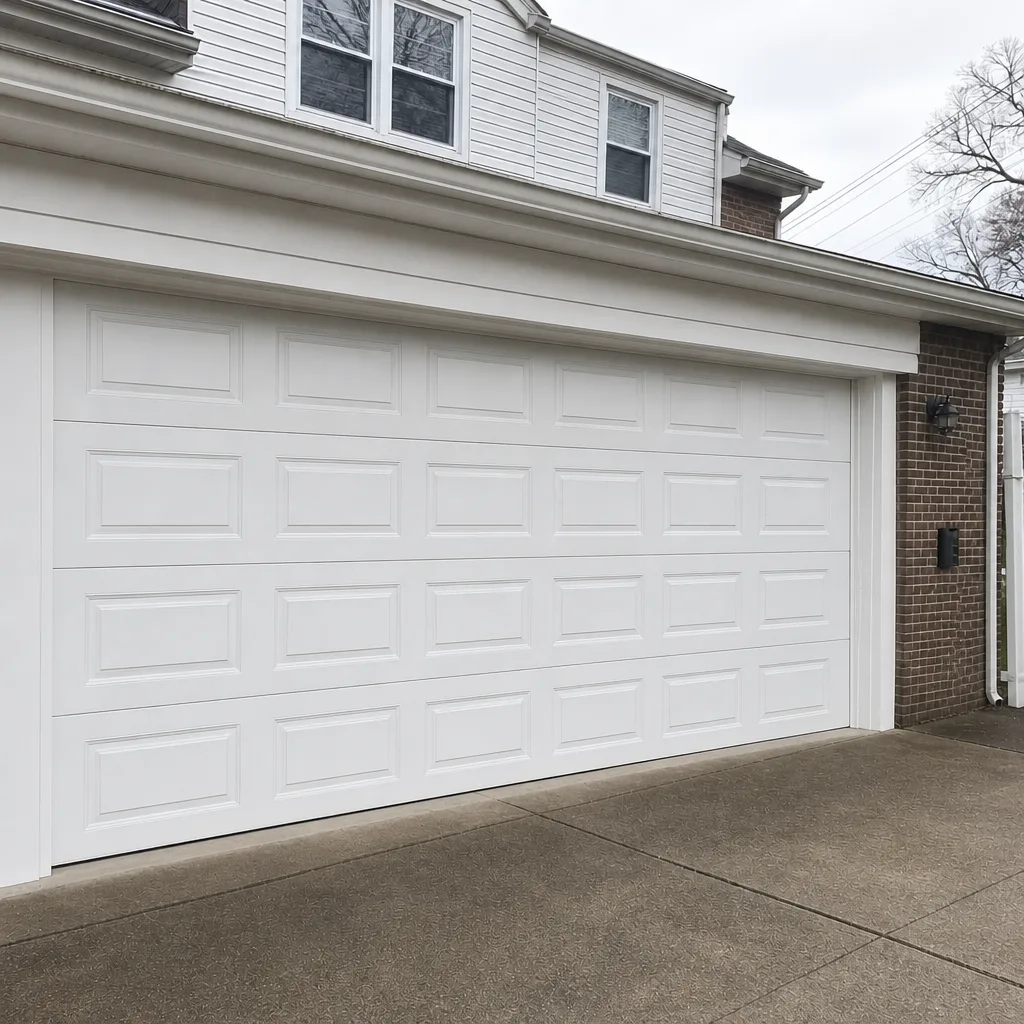 After
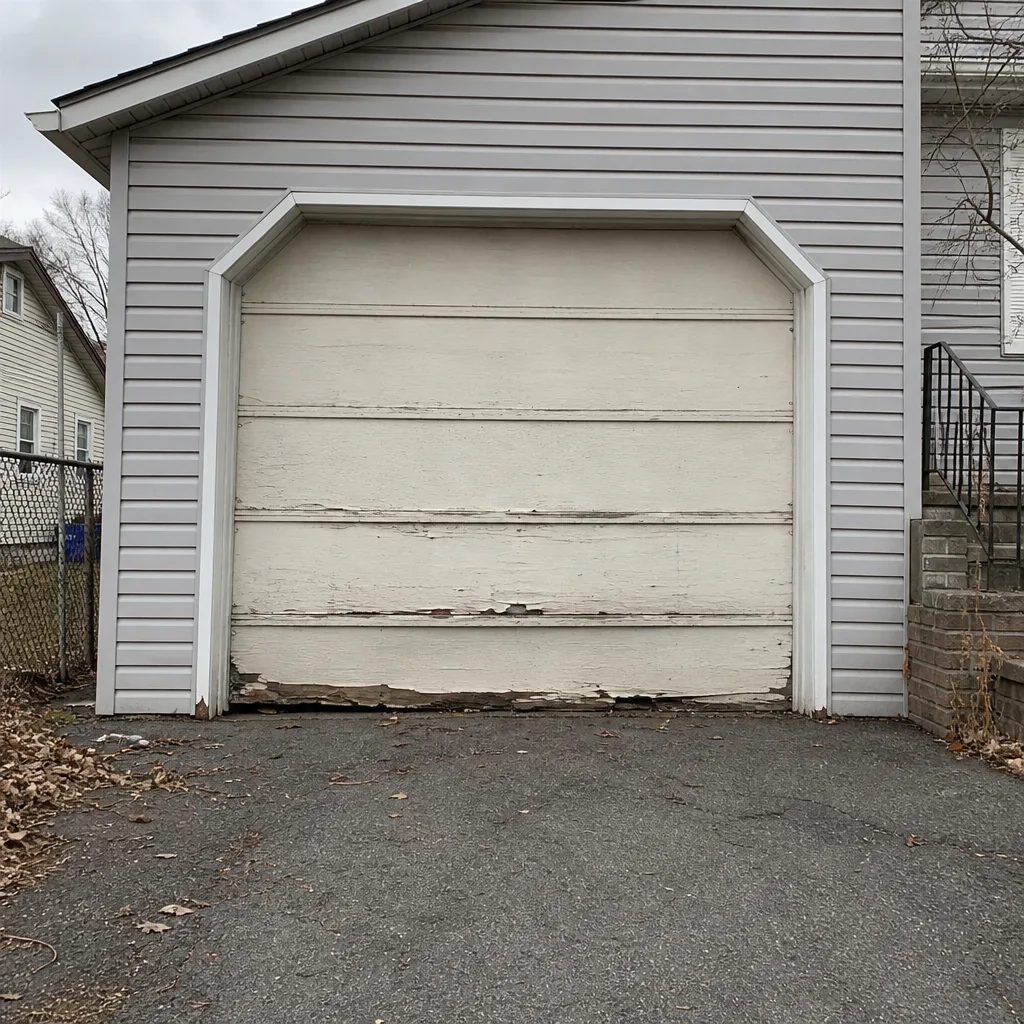 Before
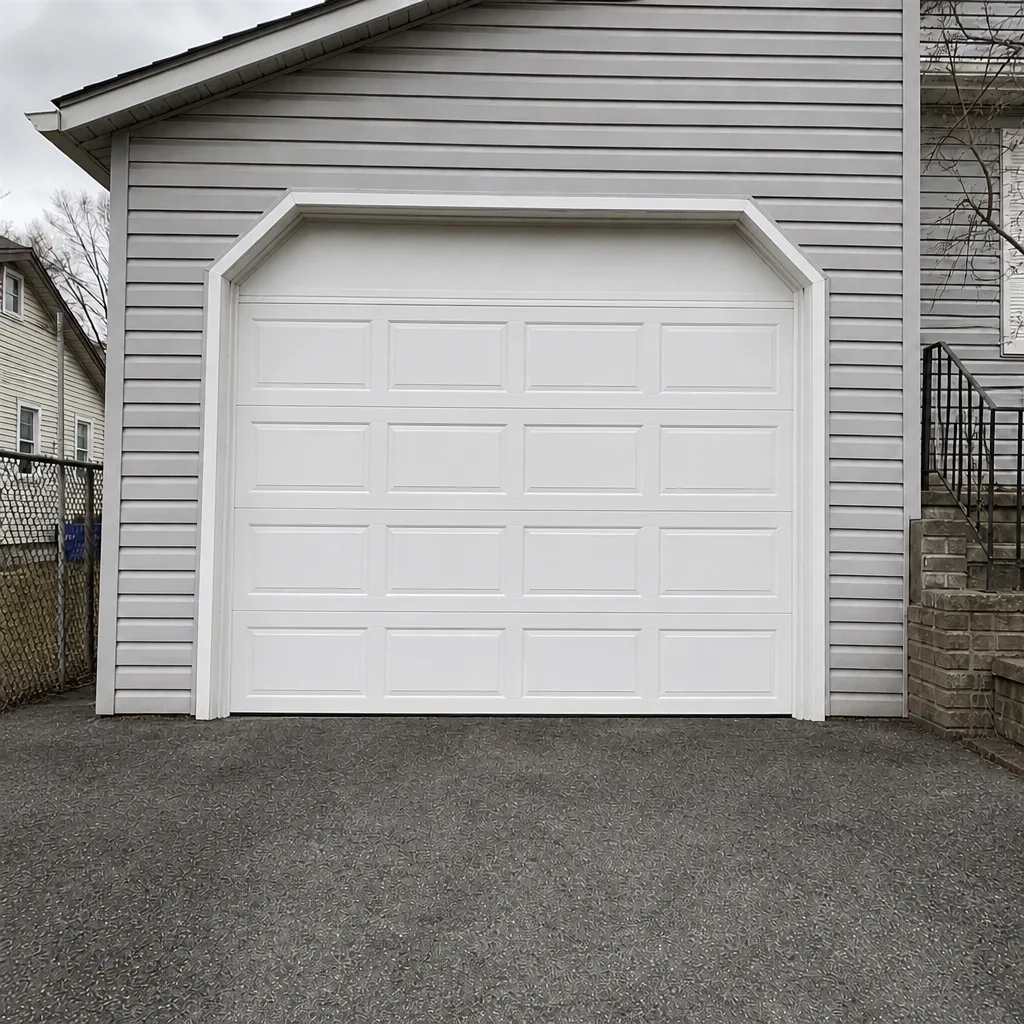 After
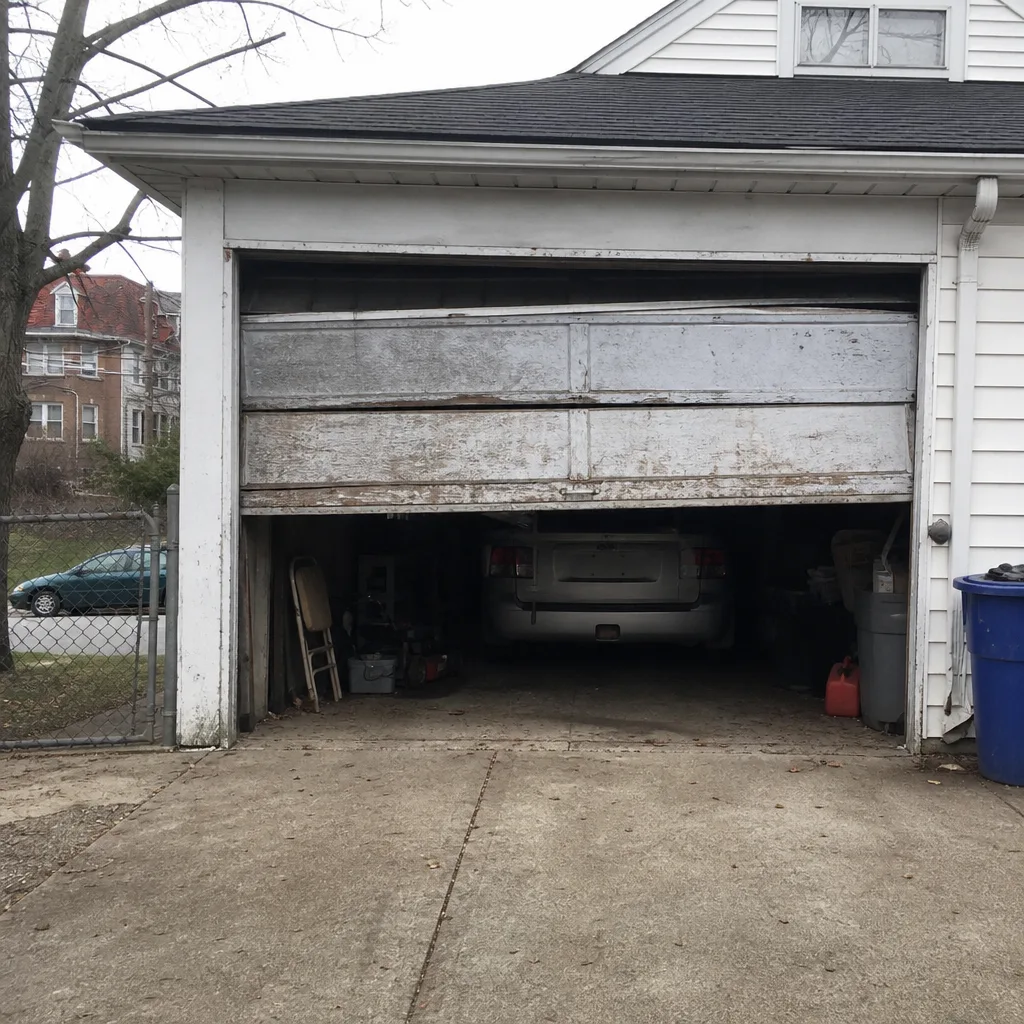 Before
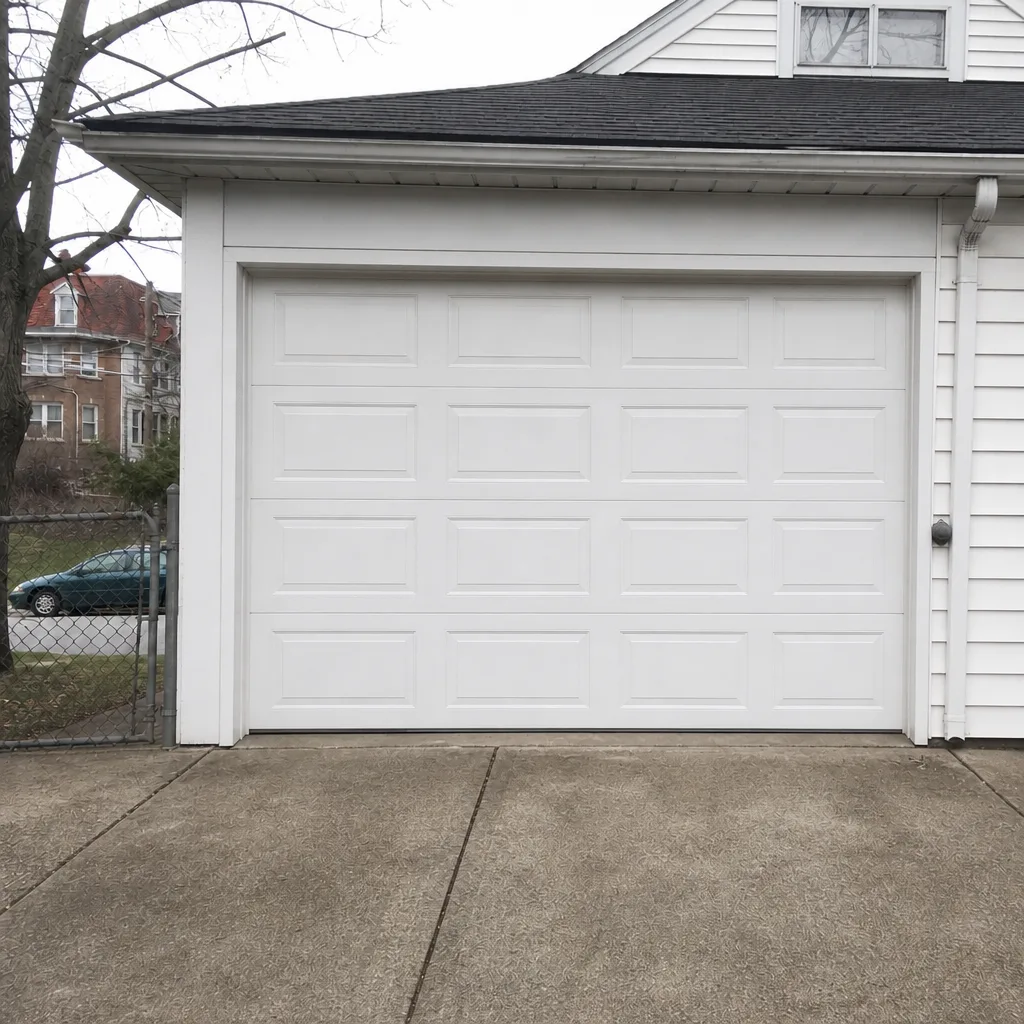 After
When to Call a Professional
Call a garage door specialist in Yonkers when the door won’t close completely or reverses unexpectedly, when a spring has snapped (loud bang, door won’t lift, cables visibly slack), when a door has come off its track, when an opener runs but the door doesn’t move, or when an opener’s safety-reversing sensors fail their test. Call before you replace an opener that hasn’t been diagnosed. Call before you accept any quote where the opening wasn’t measured. And call without hesitation on spring work – the risk of injury from a mishandled torsion spring is genuine and not worth the savings of doing it yourself. Our team works on LiftMaster, Chamberlain, Genie, Clopay, and Raynor doors and openers, along with the rest of the major brands, and we bring a focused garage door service, not a general handyman’s range. Yonkers Garage Door Repair Co offers free estimates in Yonkers – call (844) 443-4494. We answer 24/7. Fast dispatch from 7am to 7pm, Sunday through Friday. Every price is agreed before any work starts.
Frequently Asked Questions
A standard single-car garage door installed in Yonkers in 2026 typically costs $1,400 to $3,200, and a double door runs $2,200 to $5,500, depending on material, insulation, and whether the opening is non-standard. The written estimate sets the final price. Call (844) 443-4494 for an exact quote – estimates are free.
A single torsion spring repair in Yonkers runs about $180 to $340 per spring, and since the springs wear as a pair most jobs replace both – so expect roughly double that for a matched pair. The price includes the spring, the labor, and tensioning to the door’s actual weight. Call (844) 443-4494 to schedule a repair – we answer 24/7.
For repair work, same-day service is often possible – a snapped spring or a door off its track is not something you should be waiting days on. Call (844) 443-4494 and we’ll confirm what’s available. New door installations are scheduled after a measure and a written quote, not same day.
The written estimate is the price you pay for the work it describes. If the technician finds something the phone conversation didn’t reveal – a bent track under the door or an out-of-square opening – that becomes a separate, disclosed line item before any work starts. No work begins until you’ve agreed to the price. Call (844) 443-4494 to book an estimate – estimates are free.
The local professional we connect you with is licensed and insured as their state requires. Our technicians have up to 13 years of experience on the full range of brands – LiftMaster, Chamberlain, Genie, Clopay, Amarr, Wayne Dalton, Craftsman, and Raynor – and they work on the hardware that’s already in your garage. Call (844) 443-4494 with any questions.
We work throughout Yonkers, including Park Hill, Colonial Heights, Nodine Hill, Crestwood, Woodstock, Lawrence Park, and the surrounding blocks – so if your door is in one of those neighborhoods, we’re familiar with the kind of openings and housing stock you’re dealing with. For a full door replacement, call (844) 443-4494 and we’ll schedule a free measure. For repair work, we’ll get you on the schedule as quickly as we can.
The Bottom Line
Garage door pricing in Yonkers in 2026 is a real number with real variables: Westchester labor rates, non-standard openings in older housing stock, and salted-street hardware premiums that national cost estimators don’t account for. A full replacement typically lands between $1,400 and $3,200 for a single door, spring repair runs $180 to $340 per spring, and opener replacement is $350 to $750. The higher quote isn’t always the bad one – a 20,000-cycle spring, a properly sized opener, and nylon hardware cost more up front and less over the decade you’ll actually own them. The written quote is the price. Whatever you do, get the opening measured, ask for the per-spring price, and don’t touch a torsion spring yourself.
When you’re ready to have someone look at the actual door, call Yonkers Garage Door Repair Co at (844) 443-4494 for a free estimate. We answer 24/7. Fast dispatch from 7am to 7pm, Sunday through Friday. From spring to opener to the full door, we diagnose correctly and quote honestly – and we don’t start work until you’ve agreed to the price.
Written by the team at Yonkers Garage Door Repair Co.