
Last updated November 21, 2026
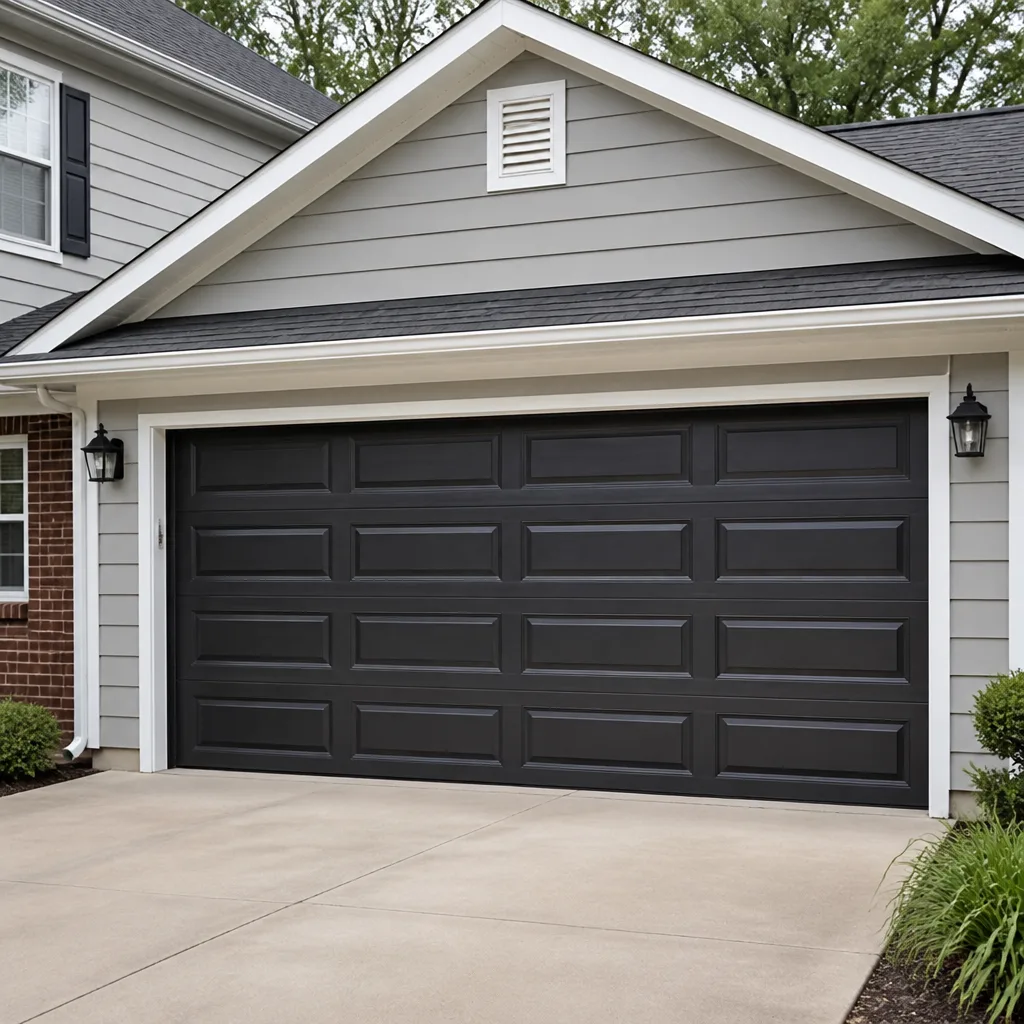 Raised-panel steel
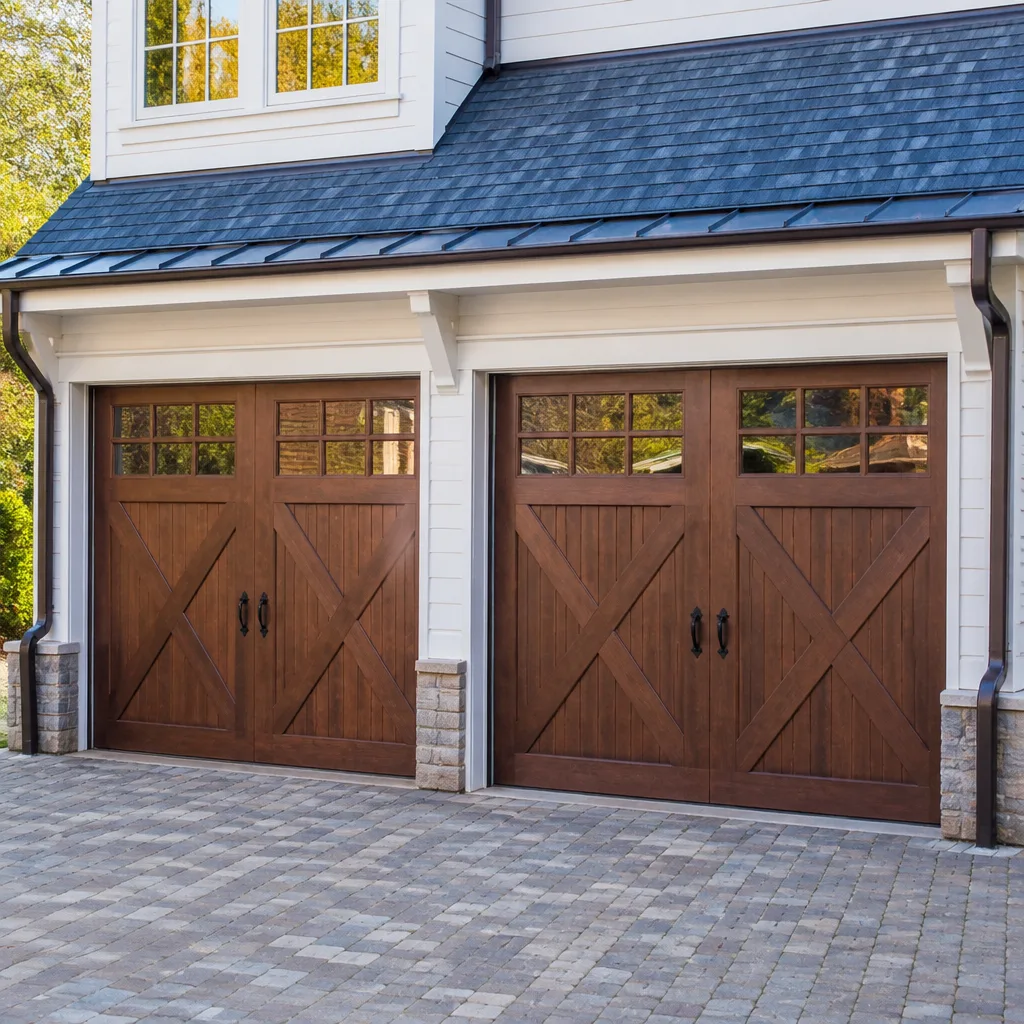 Carriage house
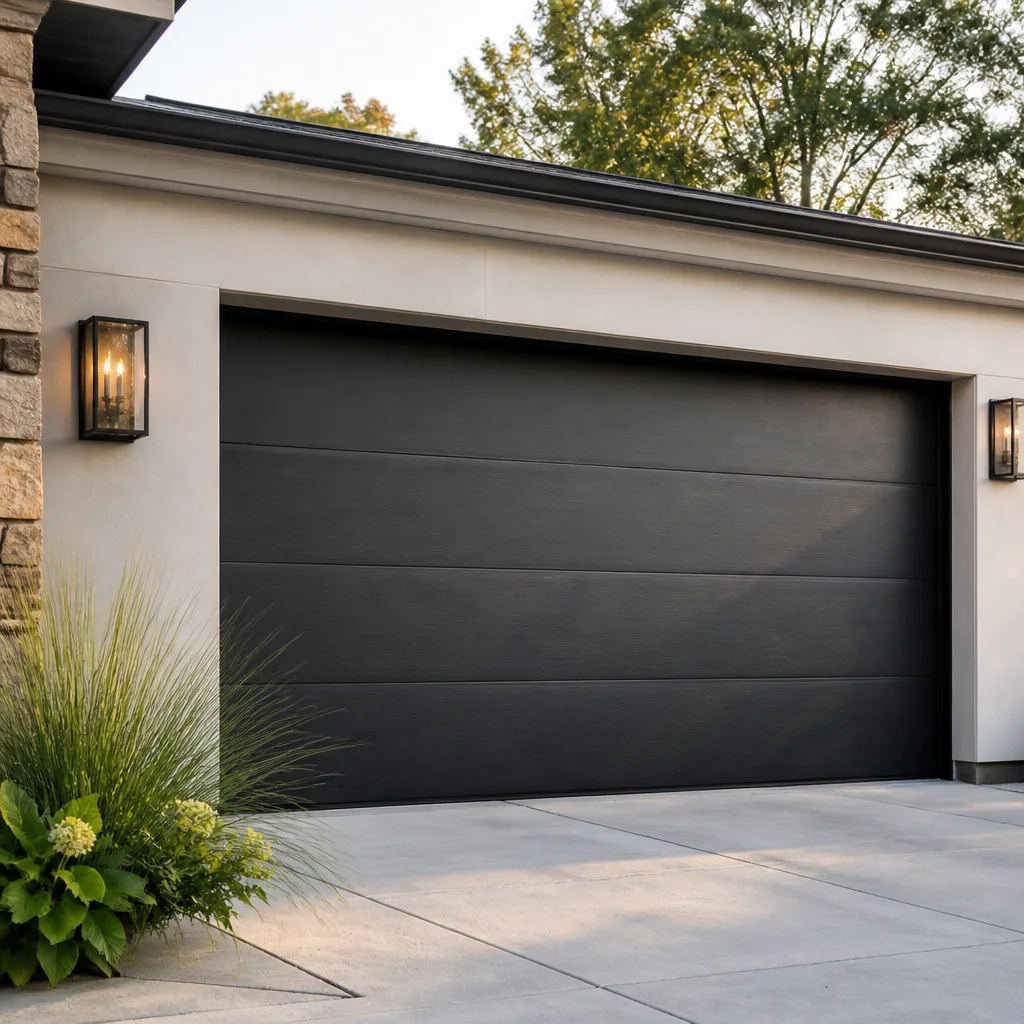 Modern flush
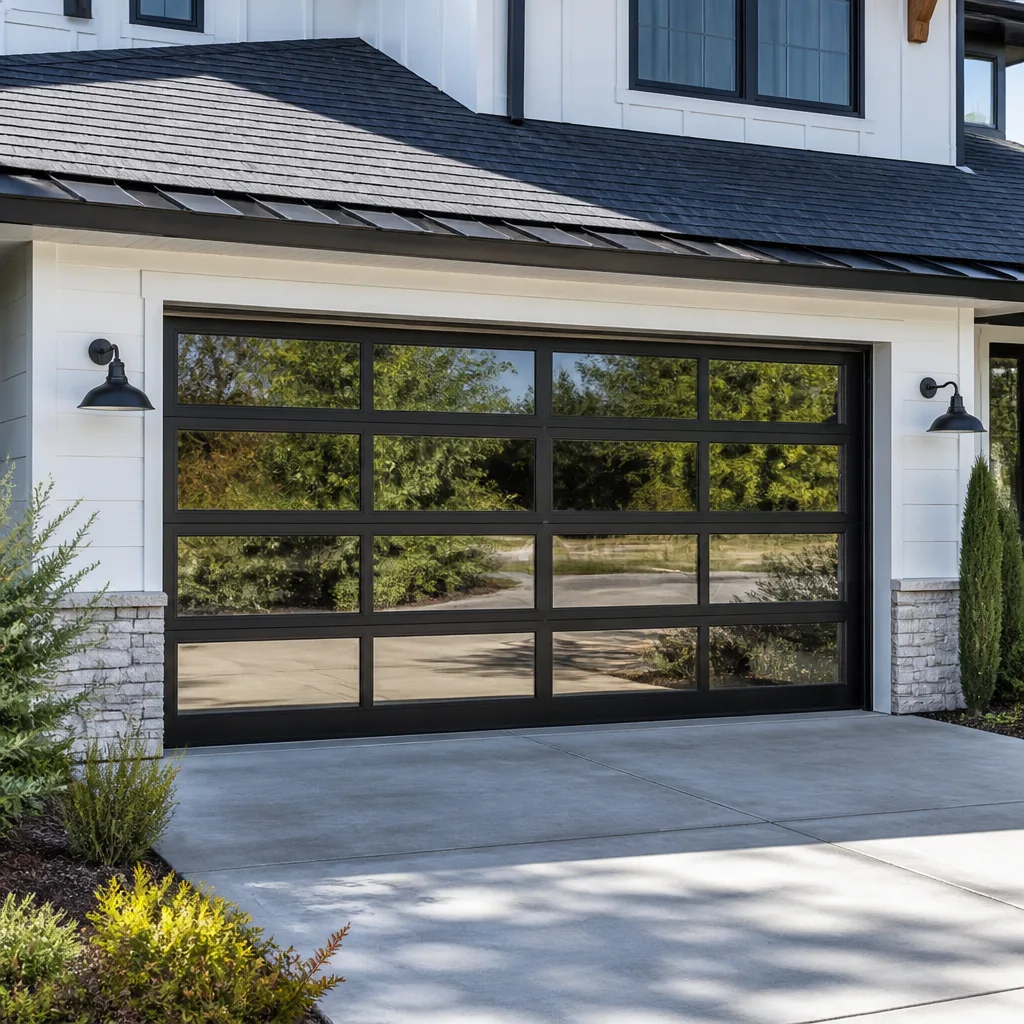 Full-view glass
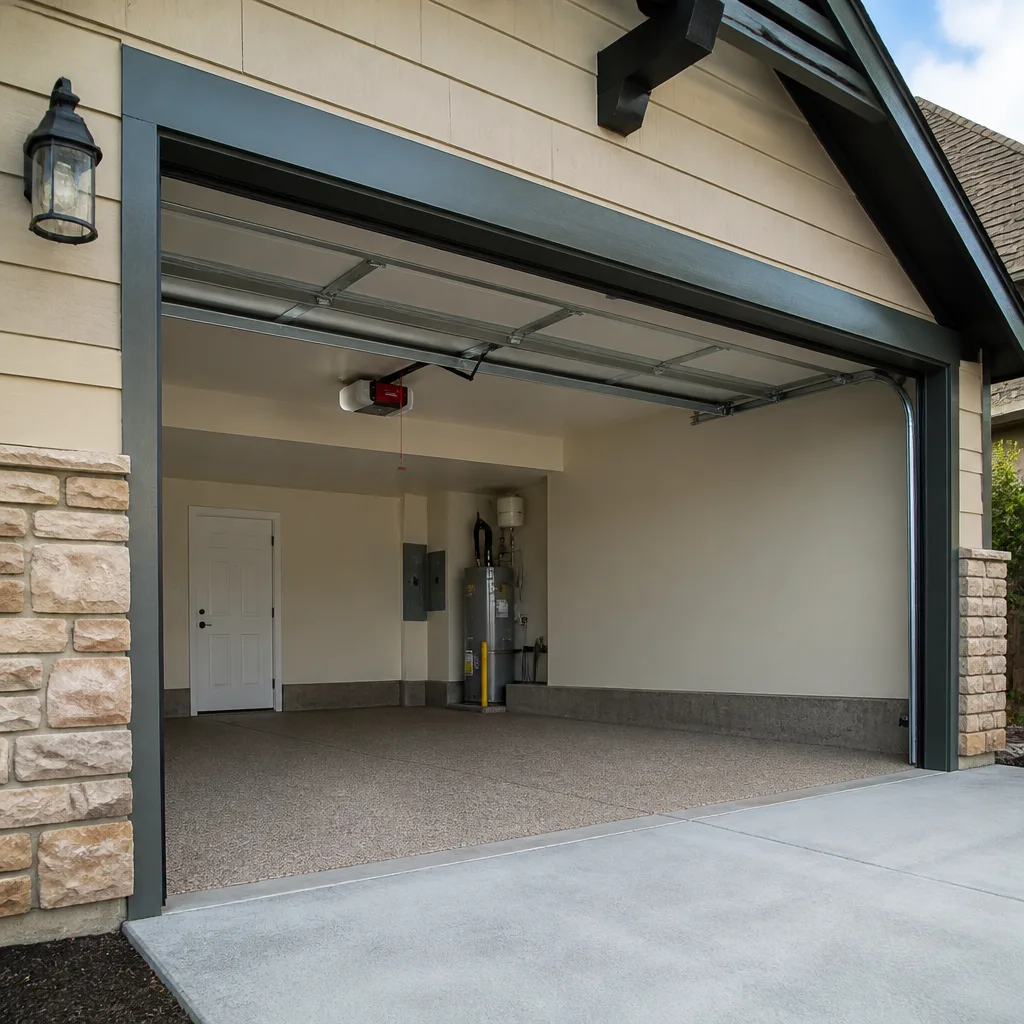 LiftMaster openers
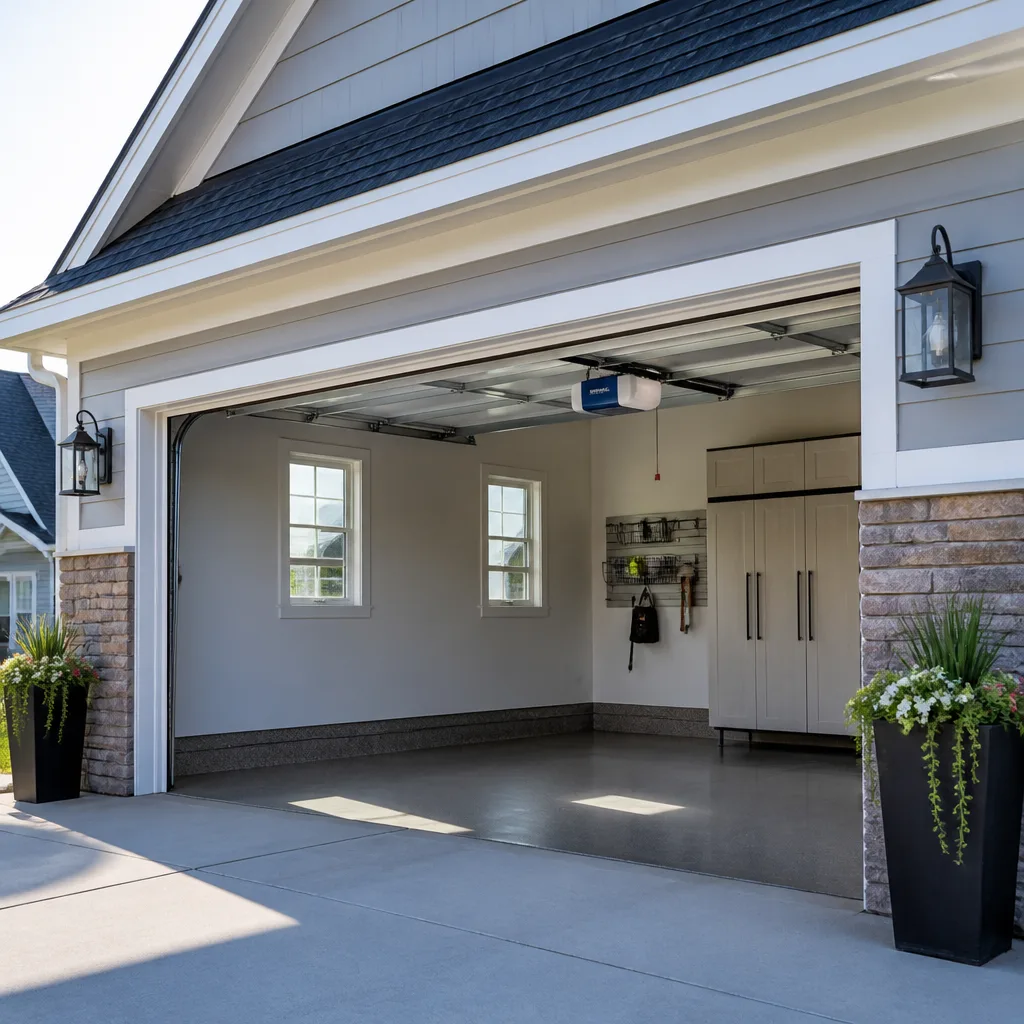 Chamberlain openers
Full 25-point door and opener safety check with every visit - springs, cables, rollers, tracks, and your LiftMaster or Chamberlain opener included
You get a price before we start. It does not change when the pro arrives.
Get your free estimateGarage Door Emergency Preparedness Guide for Yonkers Homes
Here’s the part most homeowners get wrong: a garage door emergency is rarely about a broken part. It’s about not knowing the steps. During a power outage, the red cord hanging from your opener track is the difference between getting your car out in 30 seconds and calling a locksmith. Most Yonkers homeowners have never pulled it, don’t know what to expect when they do, and don’t know the one thing to check before they pull it in winter. This guide walks through the three emergencies we see most in Yonkers – storm damage, a power failure during a freeze, and a door stuck down with a car inside – with a safe response sequence for each, plus a contact card you can post in the garage and fill in before you need it.
Quick Answer
A garage door emergency in Yonkers comes down to three moves: get the door open only if it’s safe, keep people clear of the door and its hardware, and call a garage door specialist rather than forcing anything. The red manual release cord lets you open a door by hand during a power failure – but only after you’ve checked that the springs and cables are intact and the door is fully down. Anything involving a snapped spring, a broken cable, or a damaged track means the door stays where it is until a technician arrives.
Styles & brands we work with
- Raised-panel steel
- Carriage house
- Modern flush
- Full-view glass
- LiftMaster openers
- Chamberlain openers
Table of Contents
- The Manual Release Cord: What It Does and When to Pull It
- Power Failure During a Freeze: The First Thing to Check
- Storm and Impact Damage: What to Do and What Not to Do
- A Door Frozen to the Threshold: The Correct Method
- When a Cable Snaps Mid-Operation
- Your Emergency Contact and Information Card
- Common Mistakes to Avoid
- When to Call a Professional
The Manual Release Cord: What It Does and When to Pull It
The red cord hanging from your opener rail is a mechanical disconnect. It pulls a lever that separates the door from the opener carriage, so the door runs free on its tracks and springs. That’s the whole point – the door gets its lift from the torsion or extension springs, not from the opener motor. The opener only guides the door up and down. Once you pull the cord, a door with healthy springs can be lifted by hand, and a door with a broken spring suddenly weighs far more than you can safely hold.
That’s why the order matters. Before you pull, check the door is fully closed. A door frozen partway up will drop the moment the carriage releases, and that’s a serious hazard. Then look at the springs and cables. With the door down, look for a spring with a clean gap in the coil – that’s a snapped spring – and cables that look slack or unspooled on one side. If either shows, don’t pull the cord. Call us instead.
Steps to release and re-engage the door
- Confirm the door is fully closed and nothing is underneath it.
- Check the springs (visible gap in the coil) and cables (slack, unspooled, frayed) for damage. Stop here if you see either, and call (844) 443-4494.
- Stand to the side of the door, not directly under it, and pull the cord straight down firmly.
- Lift the door by its bottom edge – slowly, hand over hand – to about waist height, then to fully open. It should feel light if the springs are healthy. If it’s heavy, lower it and stop.
- Prop nothing under the door. Lifting it fully gives you clearance to move a car.
- To re-engage: close the door fully by hand, then pull the cord once more. This snaps the carriage back into its travel position. Run the opener one cycle to confirm it reconnects.
Owners of doors built on Clopay and Amarr hardware will recognise this as the standard procedure – the disconnect lever and carriage are universal across makers. If the carriage refuses to re-engage, the door is misaligned at the track or the opener limit settings are off, and that’s a job for a technician. Our garage door opener repair covers both.
Power Failure During a Freeze: The First Thing to Check
In winter, a power failure does two things at once in a Yonkers garage. It stops the opener, and it stops the heat in the space above the garage. Con Edison outages that hit the city during a cold snap commonly leave homes without power for hours, and that’s when doors freeze to the threshold. The difference between a 30-second exit and a damaged bottom seal is a check before you lift.
After you pull the red cord, walk to the door and press down on the bottom edge. If the door doesn’t budge, the seal has bonded to the floor. Don’t lift. Lifting a frozen seal tears the rubber weatherstrip or cracks the bottom panel’s seal in two. Instead, follow the freeze protocol in the section below.
What the red cord does in a freeze
The cord releases the carriage, but it can’t fight ice. If the door is frozen, the cord only lets you pull against a stuck door – and the force goes into the hardware, not the ice. That’s the situation to avoid. Get the door freed first, then release the carriage. And remember the cord is not a substitute for a technician. A door that won’t rise smoothly after a release often has a spring or cable issue that the freeze hid.
If the power comes back and the opener runs but the door won’t move, the carriage may be left disconnected. Close the door fully by hand and pull the cord again to re-engage. We get this call often after a winter storm in Yonkers, and it’s usually a five-minute fix on-site once we confirm the hardware is sound.
Storm and Impact Damage: What to Do and What Not to Do
Storm damage in Yonkers is mostly wind. When a branch or a piece of debris strikes the door, the first thing to check is the door panel and its frame. If the door is stuck partway down with a limb jammed in it, leave everything exactly as it is. The jam is holding the door, and moving the limb can drop the panel. If a car has backed into the door and the frame is bent, the same rule applies: don’t cycle the opener until a technician looks at it.
A door that won’t close after an impact is not a door to force. The opener’s travel limits are set to the door’s original run, and a bent panel changes that geometry. Running the opener against a bent frame strips the carriage and damages the opener’s drive gears. Instead:
- Turn off the opener at the wall switch or breaker so no one accidentally cycles it.
- If a vehicle is inside and needs to leave, treat the door as a frozen door: pull the cord only after confirming the springs and cables are intact, and lift by hand with two people if the door is heavy.
- Take a photo of the bent panel and frame from the inside and outside. It helps the technician and helps us write a written estimate when we arrive.
- Call (844) 443-4494 for an emergency visit. We answer 24/7. Fast dispatch from 7am to 7pm, Sunday through Friday.
Securing the door overnight is sometimes the priority. A wedged 2×4 at the bottom edge, placed under the rail from inside, holds the door down without damaging the panel further. Don’t nail or screw anything into the door or the frame to hold it – that damage makes the repair worse. When the panel or the frame is bent beyond repair, a replacement sorted through garage door installation is often the cleanest path, especially on older doors whose rail and carriage match no longer hold.
A Door Frozen to the Threshold: The Correct Method
A door frozen to the threshold needs thawing before it needs lifting. The seal bonds to the concrete or the weatherstrip, and any pull on the door puts the force into the panel and the bottom bracket. The two methods that always fail are hot water poured down the gap and a pry bar under the bottom edge. Hot water refreezes in the cold air and locks the seal tighter. The pry bar cracks the bottom panel and strips the weatherstrip from the frame.
The correct sequence is slower and safer. Start at the corners, where the seal bonds first. Use a hair dryer on its lowest heat setting, pointed at the seal line from about six inches away. Work along the bottom edge, moving the heat in a slow sweep. Never point a heat gun at the door – the panel coatings on Wayne Dalton and Craftsman doors can blister at the temperatures a heat gun reaches.
The freeze sequence
- Turn off the opener at the wall switch.
- Hair dryer, low heat, six inches away, corners first, then the bottom edge.
- Press down on the bottom edge after each pass. When the seal gives, you’re done.
- Lift the door by hand slowly, then run it through one full opener cycle.
If the seal is already torn, freeing the door doesn’t fix the gap it leaves. That’s the point where a technician should check the bottom seal and the weatherstrip before the next freeze. A torn seal at the threshold is a common Yonkers winter problem on older doors, and it’s a straightforward replacement.
When a Cable Snaps Mid-Operation
A snapped cable is the one emergency where the right move is to do nothing. The cables run from the bottom bracket to the drum at the top of each side. When one snaps, the door is supported by a single side, and the panels can bind or twist in the tracks. Moving the door – by hand or by opener – loads the failed side and risks a panel dropping. That’s a serious hazard, and we treat it with the same care as a broken torsion spring.
The safe steps are short:
- Turn off the opener at the wall switch or breaker.
- Keep everyone, especially children and pets, away from the door and the tracks.
- Don’t pull the red cord. The failed side has no tension, and releasing the carriage puts the full weight of the door on the remaining side.
- Don’t try to re-hook the cable or push the door back into the track.
- Call (844) 443-4494. We answer 24/7. A call outside dispatch hours is booked into the next opening, Sunday through Friday, 7am to 7pm.
A cable failure is often a symptom of high-cycle fatigue, almost always paired with a spring that’s near the end of its life. When we replace a cable, we check the springs and the bottom brackets, because the same load that snapped the cable is working on the spring every cycle. That’s part of why we offer spring repair as a dedicated service rather than an add-on. If a vehicle is trapped, the emergency visit is the priority – getting the car out safely can wait for the crew.
Your Emergency Contact and Information Card
When the door fails, you’ll be standing in the garage in the dark with a cold floor. The last thing you want to do is hunt for the opener manual or the model number. Post an emergency card in the garage now, fill it in before you need it, and take a photo of it on your phone. The card has three parts.
What goes on the card
- Spring type: “Torsion, single” or “Torsion, pair” or “Extension, one per side.” Count the springs above the door, one per side or a single long spring across the shaft.
- Opener model: the brand and model number from the label on the opener housing. Note whether the wall button is a plain button or a smart panel – that tells a technician whether the opener is in the LiftMaster/Chamberlain family or a legacy Genie or Craftsman unit.
- Door brand and size: the maker name inside the top section and the door’s width.
- Service number: our line, (844) 443-4494, in bold, on a card taped inside the garage door frame at eye level.
Add “We answer 24/7. Fast dispatch from 7am to 7pm, Sunday through Friday.” so the person grabbing the card knows what to expect. We keep a copy of this card format handy because it’s the single fastest way to speed a diagnosis on-site. With the model and spring type in hand, we can tell you on the phone which parts a job like yours usually needs, so the crew arrives with the right hardware.
Common Mistakes to Avoid
- Pulling the red cord without checking the springs first. A door with a snapped spring weighs far more than you can hold, and the release sends it down.
- Using hot water on a frozen seal. It refreezes in the cold and locks the door tighter – the one method that always fails on a Yonkers winter morning.
- Prying with a bar or a shovel. It cracks the bottom panel and strips the weatherstrip from the frame. The damage usually costs more than the freeze did.
- Running the opener against a jammed door. The travel limits are set to a straight door, and a bent frame or a limb in the track strips the carriage and the opener gears.
- Re-hooking a snapped cable by hand. The remaining side is under full door weight, and the panel can drop. Leave it and call us.
- Holding a damaged door down with screws or nails. It’s a common shortcut, but the fastener damage makes the repair worse and can void a panel’s structure. A wedged board does the same job without the damage.
- Lifting a door by the bottom bracket. The bracket is the cable attachment point, and a lifting hand there is a finger trap. Lift by the panel edge, not the bracket.
See the difference
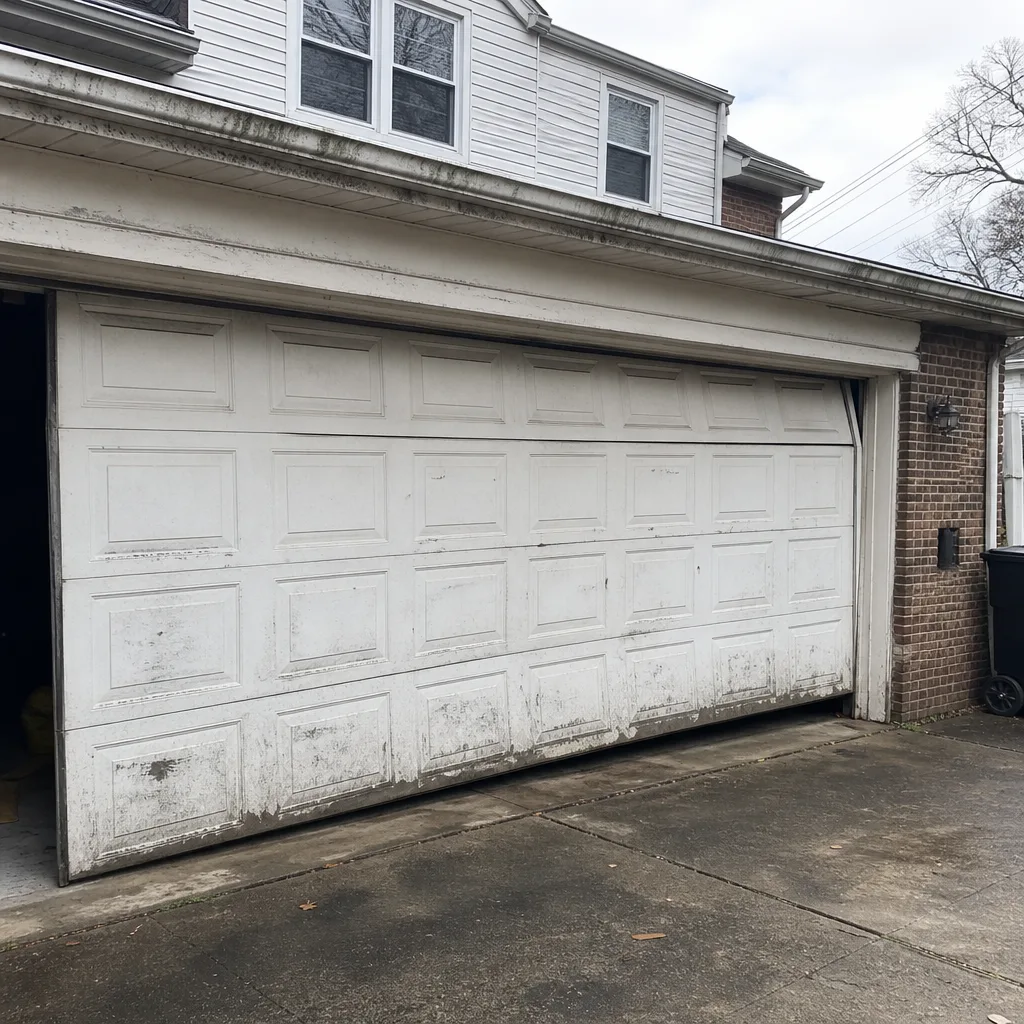 Before
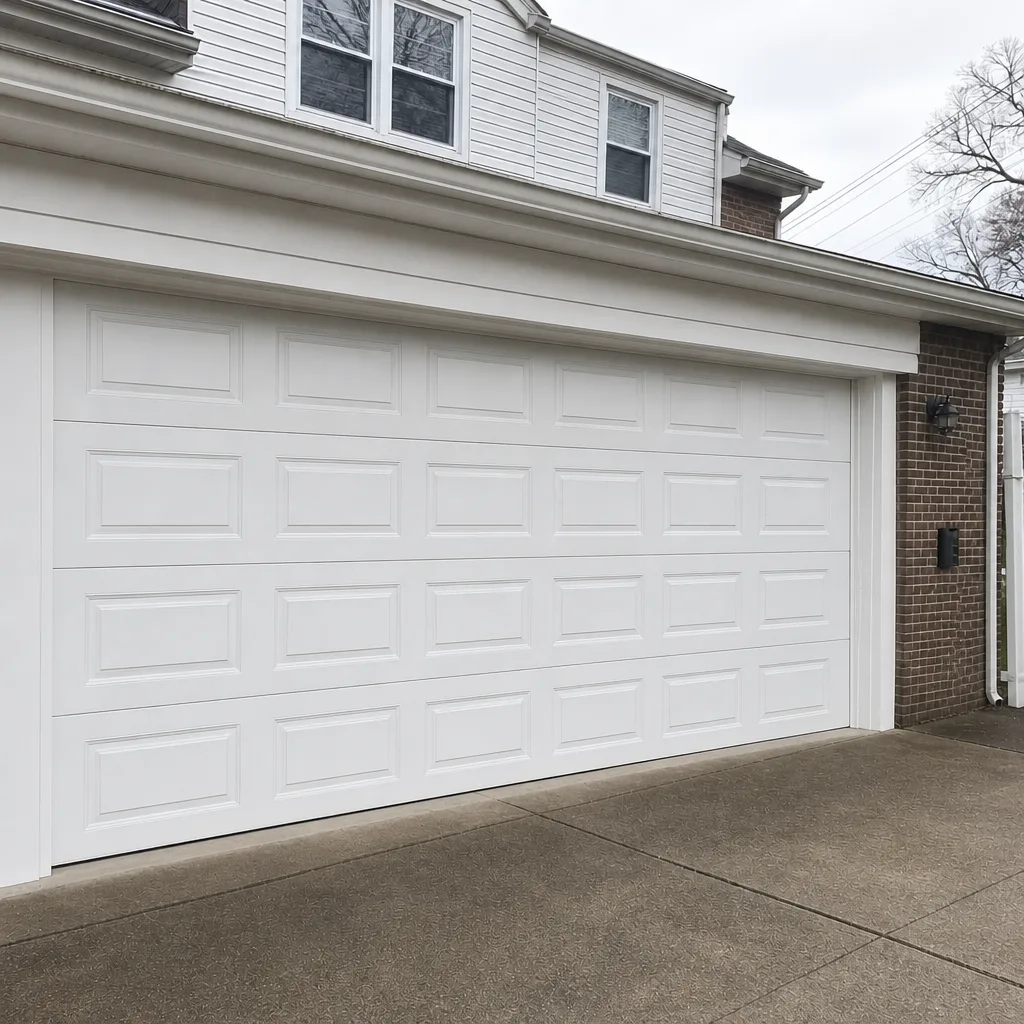 After
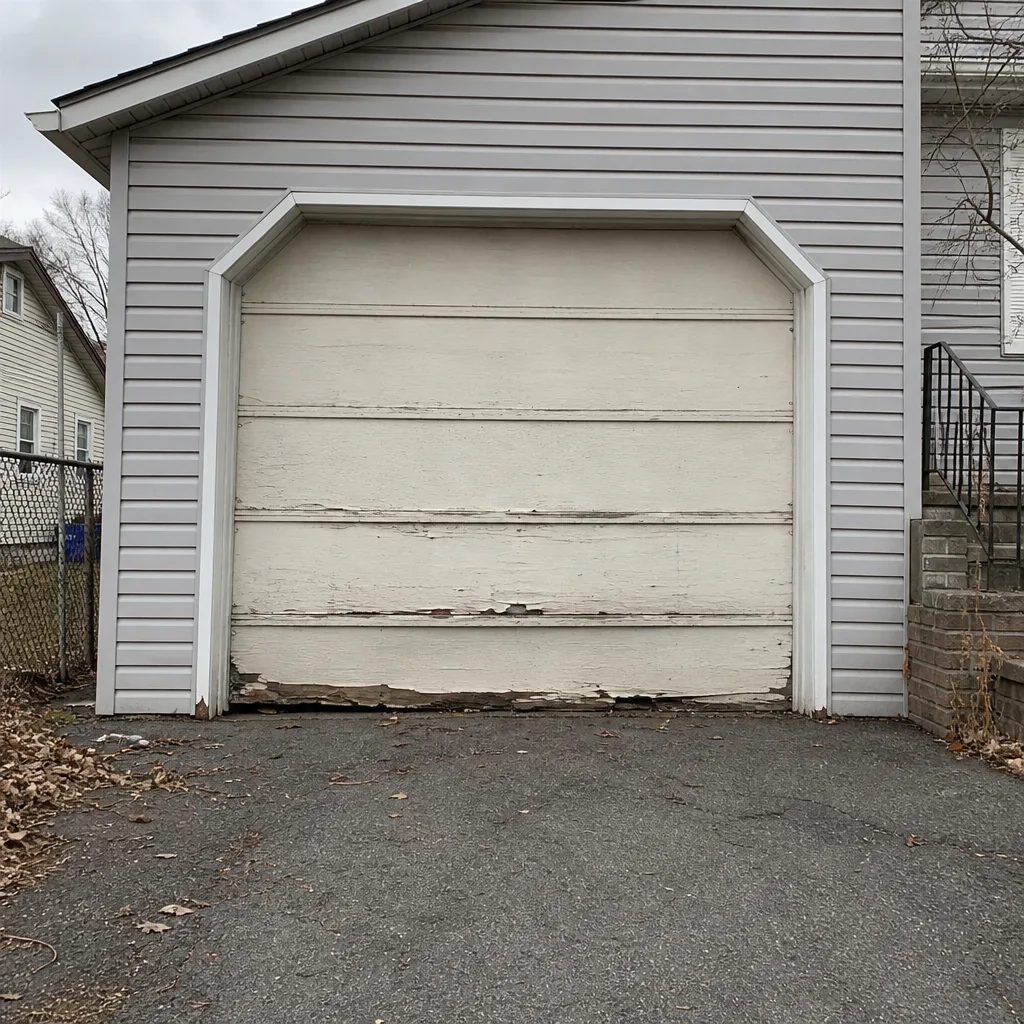 Before
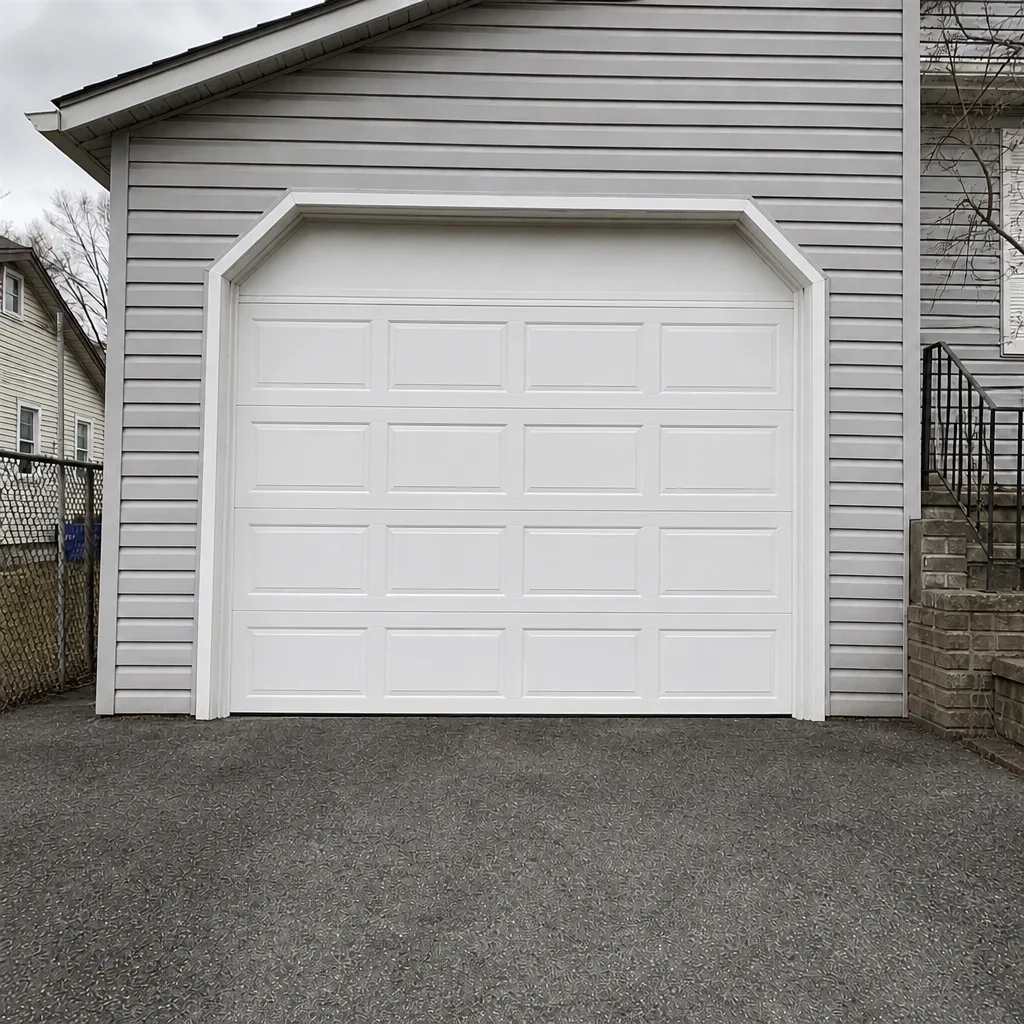 After
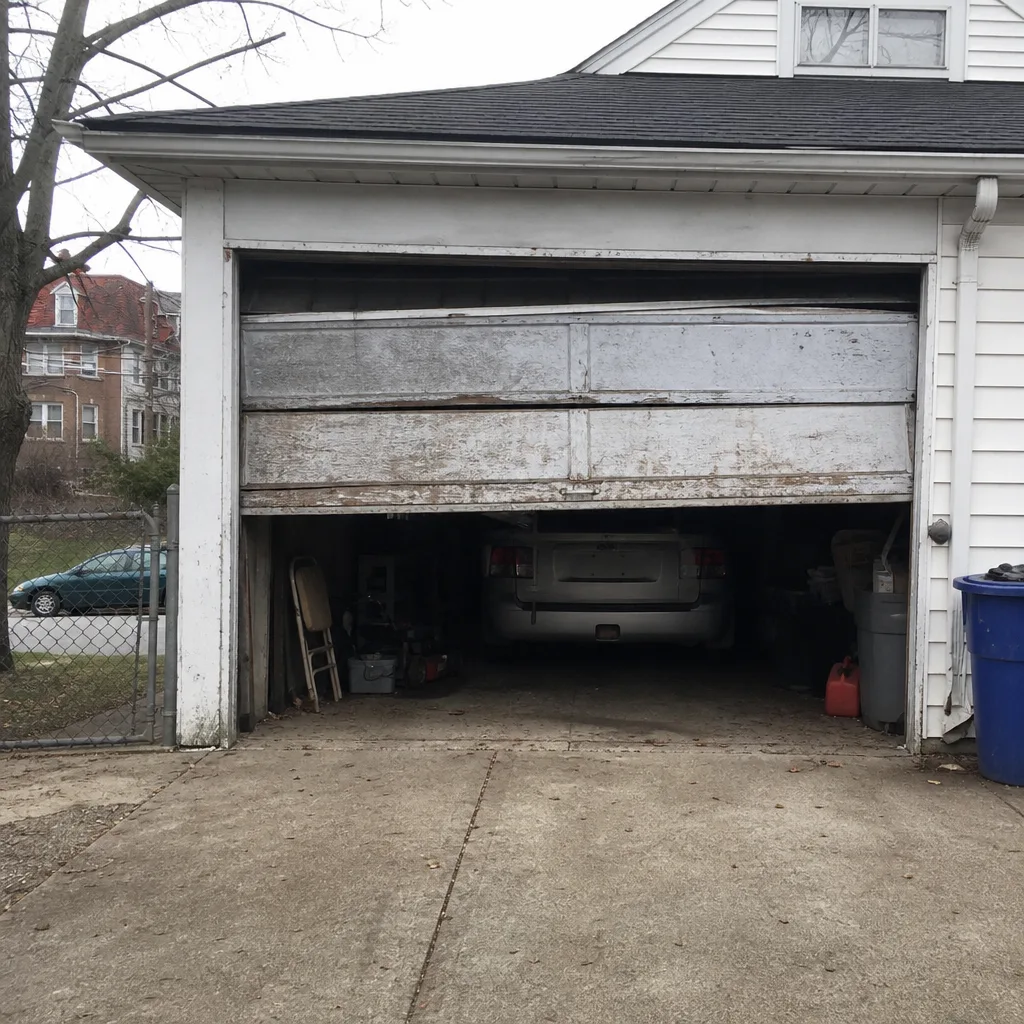 Before
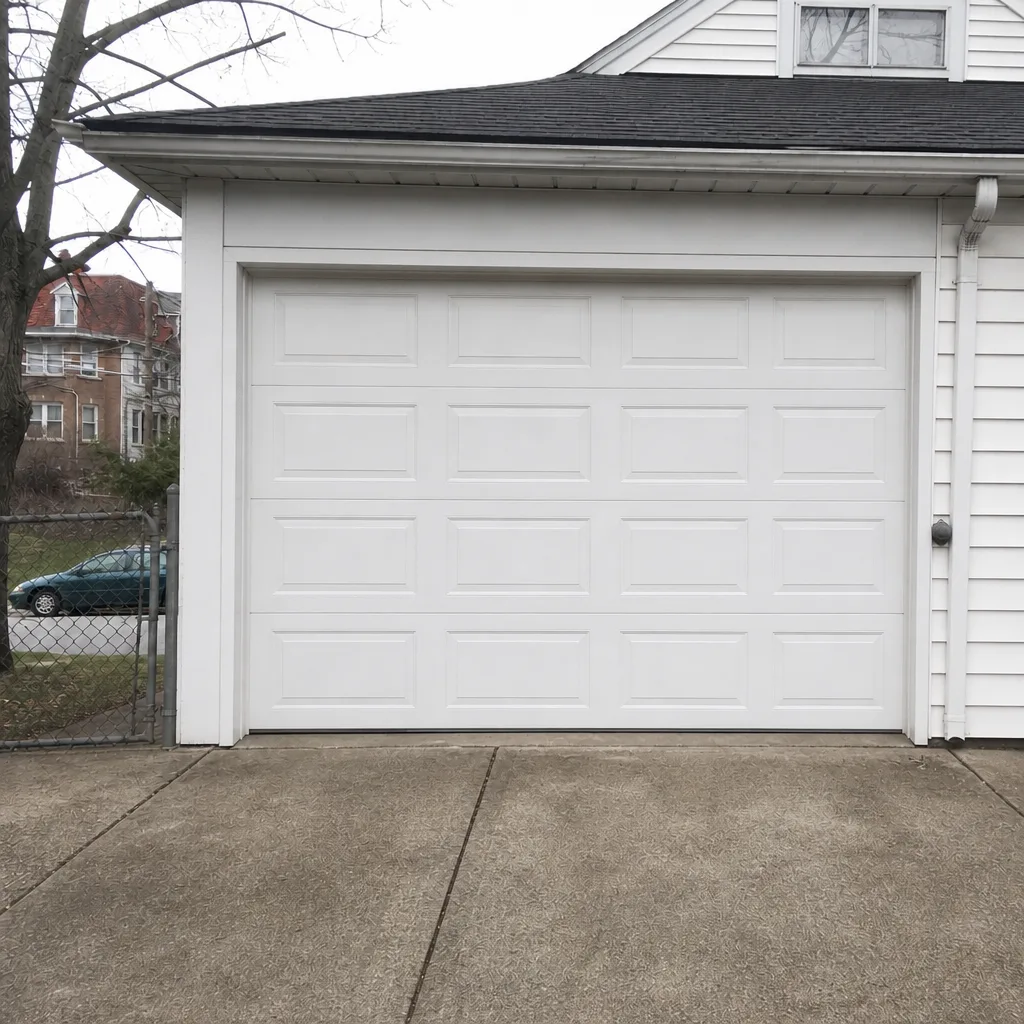 After
When to Call a Professional
Some garage door problems are for a homeowner. A dead remote battery, a wall button with no power, a door frozen to the threshold that you can free with a hair dryer – those are safe to handle. The rest are for a trained technician. Call us when the door won’t open or close and the springs or cables show damage. Call us when a cable has snapped, when a panel is bent or jammed, when the opener runs but the door doesn’t move, or when the door comes down hard. And call us when the door is stuck down with the car inside and you can’t safely lift it. Our technicians have up to 13 years of experience and are trained in torsion and extension spring work. Yonkers Garage Door Repair Co offers free estimates in Yonkers – call (844) 443-4494. We answer 24/7. Fast dispatch from 7am to 7pm, Sunday through Friday, and we diagnose the problem before we quote, so the price you agree is the price that holds. Our Yonkers Garage Door Repair Co team handles the whole job, from the diagnosis to the repair or the replacement.
Frequently Asked Questions
Yes, but only after you confirm the door is fully closed and the springs and cables are intact. The cord releases the opener carriage so the door runs on its springs. If you see a gap in the spring coil or a slack cable, don’t pull it – call (844) 443-4494 instead.
Thaw the seal, don’t force the door. Use a hair dryer on low heat from about six inches away, working the corners first and then the bottom edge. Skip hot water and pry bars – both damage the seal or the panel. If the seal is torn, call us for a check before the next freeze.
No. A snapped cable leaves the door supported on one side, and moving it risks a panel dropping. Turn off the opener, keep everyone clear, don’t pull the red cord, and call (844) 443-4494. We answer 24/7. Fast dispatch from 7am to 7pm, Sunday through Friday.
Yes, for urgent failures that can’t wait. Same-day service is available for stuck doors, snapped cables, broken springs and damaged openers. Call (844) 443-4494 and we’ll book the visit. Estimates are free, and the price is set in writing before any work starts.
No. We diagnose the door, quote the job in writing, and you agree to it before we start. The written estimate is the price. For a door that needs parts we don’t know about until we’re on-site, we tell you what we found and quote the full job before any work begins.
It depends on the damage. A bent bottom panel on a modern door can be replaced, but a door with a twisted frame, cracked top section or an opener that no longer matches the door’s geometry is usually better replaced. A free estimate and a written quote from our garage door repair team tells you which way the numbers point.
The Bottom Line
Garage door emergencies in Yonkers come down to three situations, and each has a safe response you can learn before the moment arrives. Power failure: check the springs, then pull the red cord. Freeze: thaw with low heat, never hot water or a pry bar. Storm or impact damage: shut down the opener and keep the door where it is. A snapped cable is the one case where doing nothing is the right move. Post an emergency card with your spring type, opener model and (844) 443-4494, and call a specialist when the hardware shows damage. We answer 24/7. Fast dispatch from 7am to 7pm, Sunday through Friday.
Written by the team at Yonkers Garage Door Repair Co.